Journal · By Anas · Updated August 22, 2026 · 8 min read
Calming Bedroom Paint Colors — 10 Soothing Shades + LRV Guide
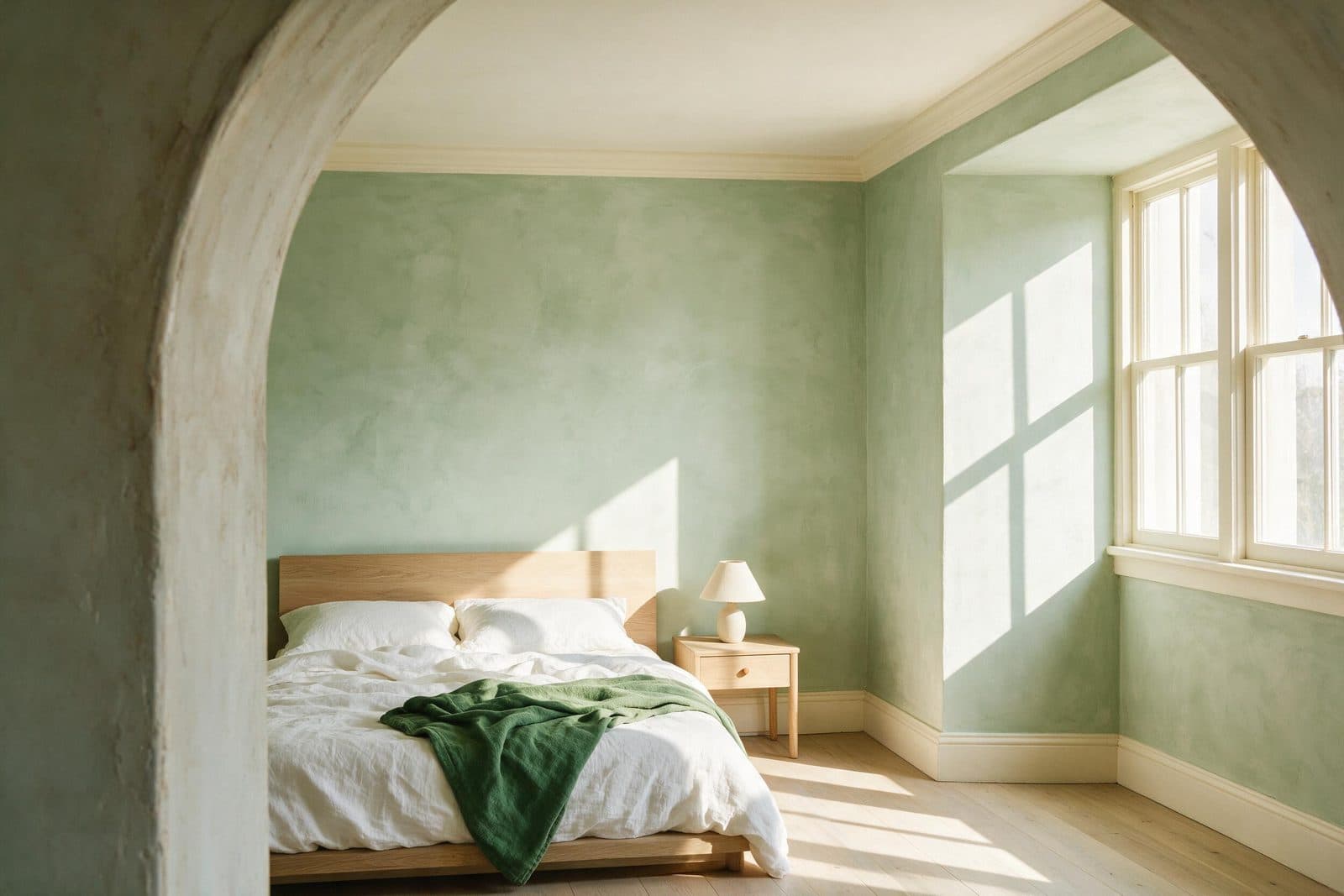
The most calming bedroom paint colors are muted greens, soft blue-greens and warm quiet neutrals — shades with low saturation and a light reflectance value (LRV) somewhere between about 45 and 75. That one sentence is most of the science. Below are ten real shades that fit it, with their brand codes and published LRVs, grouped by color family — plus the free way to see any of them on your own walls before you spend a cent on tester pots.
What makes a color calming? Mostly two numbers.
Color psychology gets oversold, so here is the honest version. Research on color and arousal points less at the hue itself and more at saturation: vivid, intense versions of any color read as stimulating, while softer, greyed-down versions of the same color read as calm. That's why a muted sage soothes and a lime green doesn't, even though both are "green." Paint is also only one of the levers a bedroom pulls on your mood — interior design and mental health covers the others, light and clutter included.
The second number is LRV — Light Reflectance Value, printed by paint brands for every shade on a 0–100 scale. It tells you how much light the color bounces back. Very high LRV walls (85+) can feel stark and bright for a room meant for winding down; very low ones (under ~30) eat lamplight and need serious layering. The comfortable bedroom band for most rooms sits roughly between 45 and 75: enough light to feel soft, not enough to feel like an office. Every shade below lists its published LRV so you can judge before you buy.
Want the fuller science of why rooms feel calm or stressful — with the actual studies?
Read The RoomCalm Theory →Calming green paint colors for bedrooms
- ·Sherwin-Williams Sea Salt (SW 6204), LRV 63 — the famous one, and famous for a reason: a pale green that drifts grey-blue as the light changes. Forgiving in almost any bedroom; test it at night, because in dim light it leans blue.
- ·Benjamin Moore October Mist (1495), LRV 47 — a sage with real presence. Mid-depth, so it feels enveloping rather than airy; happiest in a bedroom with decent daylight.
- ·Sherwin-Williams Evergreen Fog (SW 9130), LRV 30 — the moody option. A deep grey-green that makes a bedroom feel like evening all day. Gorgeous with warm lamps and brass, but it will eat daylight — plan two or three light sources, not one.
Drawn to a deeper, warmer olive? Read the honest single-shade review before you commit.
Sherwin-Williams Olive Grove (SW 7734), reviewed →Soothing blue bedroom paint colors
- ·Sherwin-Williams Upward (SW 6239), LRV 57 — a soft, grey-tempered blue that stays gentle instead of turning icy. Works in north-facing rooms better than most blues.
- ·Benjamin Moore Palladian Blue (HC-144), LRV 62 — the classic blue-green that reads spa more than sky. Shifts noticeably between morning and evening, in a good way.
- ·Sherwin-Williams Rainwashed (SW 6211), LRV 59 — sea-glass: half blue, half green, fully quiet. Pairs beautifully with white linen and pale wood.
Warm neutrals that calm a bedroom
- ·Benjamin Moore Pale Oak (OC-20), LRV 70 — a warm off-white with a whisper of greige. The safest answer on this list if you want calm without color.
- ·Sherwin-Williams Agreeable Gray (SW 7029), LRV 60 — the internet's favorite greige, and deservedly: warm enough to be cozy, grey enough to stay serene.
- ·Benjamin Moore Gray Owl (OC-52), LRV 66 — a pale, slightly cool grey that keeps a small bedroom feeling open. In very warm lamplight it softens nicely.
A calming pink? One, yes.
- ·Benjamin Moore First Light (2102-70), LRV 79 — barely-there blush, closer to a warm off-white than a pink. It warms morning light without ever reading "pink bedroom." The one to try if beige feels flat and white feels cold.
What is the best color for bedroom walls?
For most bedrooms: a muted green or green-blue with an LRV around 55–65 — shades like Sea Salt, Rainwashed or Palladian Blue — because they stay calm in both daylight and lamplight and pair with almost any bedding. But the honest answer depends on your room's light. North-facing rooms do better one step lighter and warmer (Pale Oak, First Light); bright south-facing rooms can carry the deeper shades (October Mist, Evergreen Fog) without feeling like caves, and Pewter Green is the one worth reading up on properly if you want to go darker than this band without losing the room. No list can see your window — which is exactly why you should preview before you buy.
How do I see a paint color on my own walls?
The old way is tester pots: paint big swatches, look at them morning and night for a few days. Still the gold standard for the final decision — screens never show paint perfectly. But you can now do the shortlist step in your browser for free: upload a photo of your bedroom and repaint the walls in any of these shades, right on your own room, in seconds. It never gets the final say (buy the tester pot for that), but it kills the shades that were never going to work before you've spent anything. When you do buy the tester, it is worth knowing that Benjamin Moore and Sherwin-Williams publish almost identical coverage at the top of their ranges, so the price you pay comes down to which one is on sale that week.
Repaint your own bedroom walls in any of these ten shades — free, unlimited, right in your browser. The photo never leaves your device.
Try the paint color visualizer →And if you want the whole room considered — not just the walls — upload the same photo to the free redesign tool and see your actual bedroom restyled around the calm you're after, bed and belongings kept.
See your real bedroom made calm — free, no sign-up, your things kept.
Free AI bedroom design →Want ready-made combinations instead of picking shade by shade? The Calm Paint Bible pairs 120 colors into 20 palettes that already work together.
Get the Calm Paint Bible — $14 →One last honesty note: LRVs above are the brands' published values, rounded. Paint on a screen — or on this page — is never exact, and lighting changes everything. Shortlist with the visualizer, then buy one or two tester pots and look at them at 7am and 10pm. The bedroom you wake up in every day has earned that much patience.
Quick answers
What is the most calming color for a bedroom?
Muted greens and soft blue-greens are the most reliably calming bedroom colors — shades like Sherwin-Williams Sea Salt (LRV 63) or Benjamin Moore Palladian Blue (LRV 62). Low saturation matters more than the hue itself: soft, greyed-down versions of a color calm, vivid versions stimulate.
What LRV is best for a bedroom?
Roughly 45–75 suits most bedrooms. That band is light enough to feel soft in daylight without turning stark, and dark enough to feel restful under lamps. Below about 30 a color turns moody and needs layered lighting; above about 85 it can read bright and office-like at night.
Should a bedroom be painted light or dark?
Light-to-mid shades (LRV 45–75) work for most bedrooms, especially north-facing or small ones. Dark shades like Evergreen Fog (LRV 30) can be wonderfully cocooning in a bright room with two or three warm lamps — but they eat daylight, so match the depth to the light your room actually gets.
Is green or blue more calming for a bedroom?
Both calm well, and the muted versions of each behave almost identically. Greens tend to feel warmer and more natural; blues cooler and airier. In-between shades like Rainwashed or Palladian Blue give you both at once — which is why blue-greens dominate every calming-color list.
How can I test a paint color before buying it?
Do it in two steps: first shortlist for free by repainting a photo of your own room in a browser tool like RoomCalm's paint color visualizer, then buy tester pots for your one or two finalists and view big painted swatches in morning and evening light. Screens shortlist; tester pots decide.