Journal · By Anas · Updated August 21, 2026 · 8 min read
Interior Design and Mental Health: How Rooms Affect Mood
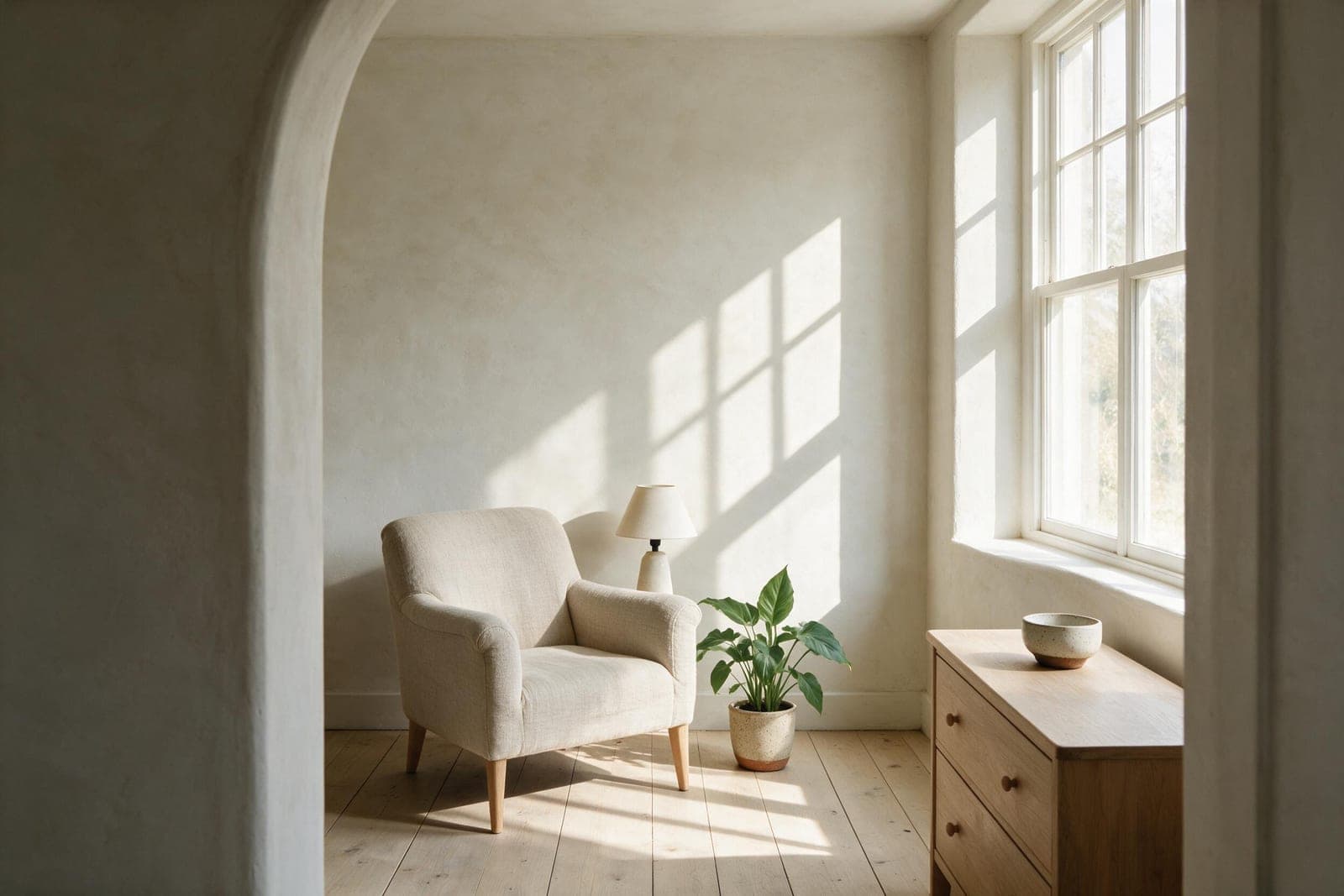
Yes, your room affects your mood, and the effect is bigger than most people give it credit for. Your brain reads a space in under a second and quietly decides whether you are safe, calm and able to think, or on low alert. Light, clutter, color and how much room you have to move all feed into that read. The good news is that the same wiring works in reverse: change what the room tells your brain, and your brain changes how it feels. This is not about spending money or gutting a room. It is about knowing which signals matter.
I noticed it first with a chair. There was one in the corner of my bedroom that slowly became the place clothes went to not-quite-be-put-away. For months it was the first thing I saw every morning. I never thought about it, but there was a small background hum of something owed, something undone, before my feet even hit the floor. The day I finally cleared it, the room felt like it had exhaled. Nothing else had changed. That gap between how much the chair mattered and how little I had noticed it is what this whole article is about.
Does clutter really cause anxiety, or is that just a saying?
It is real, and it has been measured. When your space is full of visual mess, your brain cannot fully switch off. Every stray pile is a tiny unfinished task your attention keeps snagging on, even when you are trying to relax. Researchers who study this describe clutter as a steady drain on your ability to focus, because your visual system is processing all of it whether you want it to or not. People who describe their homes as cluttered also tend to report a flatter, more tired mood and a harder time winding down at the end of the day.
There is a sharper version of this for anyone who works from home. When the same surface holds your laptop, yesterday's mug and a stack of mail, your brain never gets the signal that work has ended. The room says 'unfinished' in every direction, so your nervous system stays half-clocked-in. This is why clearing one surface can feel out of proportion to the effort. You are not just tidying. You are removing a source of low-grade alertness that was running in the background all day.
How does light in a room change your mood?
Light is probably the strongest mood lever in your home, and the one people underestimate the most. Daylight in the morning helps set the body clock that governs your sleep, your energy and a good chunk of your mood. A room that gets you near a window early in the day is doing quiet work for your brain chemistry. A room where you rarely see natural light before noon is working against it.
Artificial light matters after dark for the opposite reason. Bright, cool-white overhead light in the evening tells your brain it is still daytime and delays the wind-down it needs for sleep. Warm, low, lamp-height light does the reverse. This is the cheapest upgrade in this entire article: stop lighting your evenings from a single bright bulb on the ceiling, and start lighting them from two or three warm lamps lower down. Your body reads the softer, warmer glow as 'evening,' and evening is when it is allowed to relax.
Want the practical version of this for one room? The cozy-room guide is basically the mood-science, turned into a checklist.
Read: How to Make a Living Room Cozy →Why do some colors feel calming and others feel draining?
Color affects mood, though not in the fortune-cookie way the internet usually sells it. The honest version is subtler. Softer, muted, warmer tones tend to lower the visual intensity of a room, which most people experience as calm. Loud, highly saturated, high-contrast color demands more from your visual system, which reads as stimulating. Neither is good or bad on its own. A stimulating red is wonderful in a room where you want energy and terrible in a room where you are trying to sleep.
The mistake I see most is treating the bedroom like every other room. It is the one space whose only real job is to help you power down, and it is the one people most often paint in whatever color was on trend. If your bedroom leaves you a little wired at night, look at the walls and the brightest object in the room before you blame your phone. Blues, soft greens, warm off-whites and gentle earthy tones tend to help the body settle. What you are really doing is lowering the volume of the room so your brain can hear itself get tired.
Want actual shades, with codes? Ten calming bedroom colors with their published LRVs — and a free way to preview each on your own walls.
The calming bedroom paint colors guide →What is the connection between nature in a room and feeling better?
Bringing a bit of the natural world indoors has a measurable calming effect, and it does not take a jungle of houseplants. A view of something green, natural materials like wood and stone you can actually see and touch, and daylight all nudge the nervous system toward rest. There is a whole design approach built around this idea, and it works because human brains spent almost their entire history outdoors. A room with a living plant, a wooden surface and a window reads to some old part of you as a safe clearing rather than a sealed box.
If you have ever felt instantly better in a room full of plants and light and could not say why, this is the why. You do not have to commit to the full look to borrow the benefit. One plant you can keep alive, near the spot where you sit most, changes the emotional temperature of a room more than its size would suggest.
This one has real depth to it — the science of why nature indoors calms us, and how to use it without a green thumb.
Read the biophilic design guide →Does a messy room actually affect your sleep and focus?
Both, and they feed each other. A cluttered bedroom is linked with worse sleep, partly because the visual noise keeps the mind mildly active at exactly the moment it should be powering down. Bad sleep then thins your patience and focus the next day, which makes it harder to keep the room tidy, which feeds the clutter. It is a small loop, and most people are somewhere on it without realizing there is a loop at all.
The useful thing about a loop is that you can enter it from any point. You do not have to fix your sleep and your focus and your mess all at once. Clear the surfaces the bedroom shows you last thing at night and first thing in the morning, and you have loosened the whole loop from the easiest possible place.
Everything this article touches — clutter and stress, light and sleep, nature and attention — has research behind it, and we keep it collected in one place: The RoomCalm Theory.
Read the research →What small changes make the biggest difference to how a room feels?
You do not need a renovation or a budget to shift how a room lands on your nervous system. The changes that punch above their weight are almost all free or close to it:
- ·Clear the one surface you see most. Pick the countertop, desk or dresser your eyes land on by habit and get it to about two-thirds empty. This single spot sets the tone for the whole room.
- ·Move a seat toward the window. Where you sit for morning coffee or your first hour of work decides how much daylight your body clock gets. Chase the light.
- ·Swap your evening lighting warm and low. Turn off the big overhead bulb after dark and use warm lamps at eye level or lower. Your brain reads this as permission to wind down.
- ·Add one living plant near where you sit. Not a collection, one you can keep alive. The bit of nature does more for the mood of the room than its footprint suggests.
- ·Give your eyes one resting point. A clear stretch of wall, an empty corner, a tidy shelf. A room with nowhere for the gaze to rest feels subtly tiring, and most overcrowded rooms are missing exactly this.
None of these is dramatic on its own. Stacked together, they change what your room says to you every time you walk in, and a room that says 'you can relax here' is worth more to your week than most things you could buy for it.
How do I know which change my own room needs first?
This is where seeing beats reading. It is genuinely hard to judge your own space, because you have stopped noticing most of it, the way I stopped noticing that chair. The fastest way to break that blindness is to look at your room through fresh eyes and see a calmer version of it side by side with the real one. That contrast tells you, instantly, what your brain has been quietly reacting to.
That is the part RoomCalm was built for. Upload a photo of your actual room, say how you want it to feel, calm, cozy, clear-headed, and see your own space restyled toward that feeling, with your walls and your layout kept. It is a way to spot which change matters most for your room before you move a single thing, and it is free.
Not sure what your space is even trying to be? Find your style in two minutes — no forms, no email.
Take the free Room Style Quiz →The takeaway is small and freeing at the same time. You are not stuck with the mood your room hands you. It is made of signals, and signals can be changed, most of them for nothing. Start with the surface you see most and the light you sit in, and let your own nervous system tell you whether it worked. It usually does, and faster than you would expect.
See your own room restyled toward calm — your walls, your things, free and no sign-up.
See my room, calmer →Curious how calm your room scores right now? Get a free 0–100 read on light, clutter, cohesion and nature.
Get your free Calm Score →Want the change made into a plan? The 7-Day Calm Room Reset is one small, science-backed change a day — no shopping list.
The 7-Day Calm Room Reset →Quick answers
Does your room really affect your mental health?
Yes. Your brain reads a space within about a second and adjusts how safe and calm it feels based on light, clutter, color and space to move. A tidy, well-lit, softly colored room tends to lower stress, while a cluttered or harshly lit one keeps the nervous system on low alert.
Does clutter cause anxiety?
Clutter is strongly linked with higher stress and a harder time relaxing. Visual mess acts like a pile of tiny unfinished tasks your attention keeps snagging on, so your brain never fully switches off — which is why clearing even one surface can feel like a relief out of proportion to the effort.
What is the most calming color for a bedroom?
Soft, muted tones tend to help the body settle: blues, gentle greens, warm off-whites and earthy neutrals. What matters most is lowering the visual intensity of the room, especially the brightest object, so your brain can wind down at night.
How does lighting affect mood?
Morning daylight helps set the body clock that governs sleep, energy and mood, while bright cool-white light at night delays your wind-down. Sitting near a window early in the day and switching to warm, low lamps after dark is one of the cheapest ways to improve how a room makes you feel.
What is the quickest change to make a room feel calmer?
Clear the one surface you look at most and get it about two-thirds empty, then switch your evening lighting to warm, low lamps instead of a bright overhead bulb. Both are free, take minutes, and change the signal the room sends your nervous system.