By Anas · Updated October 14, 2026 · 8 min read
Liveable Green by Sherwin-Williams: Your Bulbs Decide
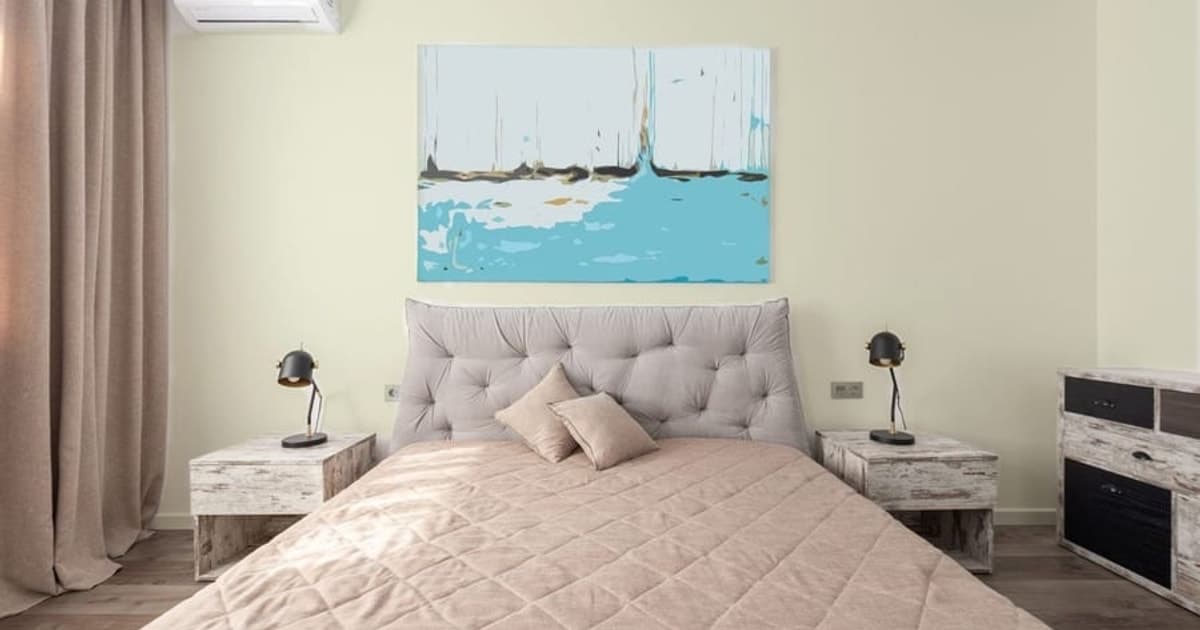
Sherwin-Williams Liveable Green (SW 6176) is a muted, light sage green with a published LRV of 61.194, an on-screen approximation of #CECEBD, and the title of Sherwin-Williams' July 2026 Color of the Month (Sherwin-Williams, read 14 October 2026). Its Lab values tell the honest story: a -2.98 (a slight green lean) and b +8.45 (a clear yellow lean), which is why Sherwin-Williams labels its saturation "Muted" and describes a "warm yellow-gray undertone." If you've been searching for livable green, the company's spelling with the extra e leads to this chip.
Here's the part the chip card doesn't tell you. That yellow lean is most of this color's personality, and the bulb in your ceiling either feeds it or cancels it. A 2700K lamp and a 5000K lamp will show you two different rooms painted from one can. Below: what each bulb does to it, how far Softened Green sits one step down the strip, which rooms Sherwin-Williams suggests and which we'd skip, and the one free way to see it on your own walls before you buy a sample.
How green is Liveable Green on a wall?
Liveable Green is only slightly green: Sherwin-Williams' own Lab reading is a -2.98 on the green-red axis and b +8.45 on the yellow-blue axis, so the yellow lean is nearly three times the size of the green one (Sherwin-Williams, read 14 October 2026). On a chip that reads as pale sage. On a wall, with more surface and reflected floor color, expect the gray-yellow side to come forward and the green to behave like a rumor rather than a statement. The RGB values, 206/206/189, say the same thing another way: red and green are equal and only the blue is held back, which is how you get a yellow-gray with a cool edge. Sherwin-Williams calls it "this cool green" with a "warm yellow-gray undertone" in the same breath, and both halves are true. Position C1 on store strip 213 makes it the lightest of seven, above Softened Green, Clary Sage, Green Onyx, Artichoke, Oakmoss and Secret Garden. We haven't painted a board in it. Everything here is read from the published numbers and what light does to them.
Is an LRV of 61 light enough for a north-facing room?
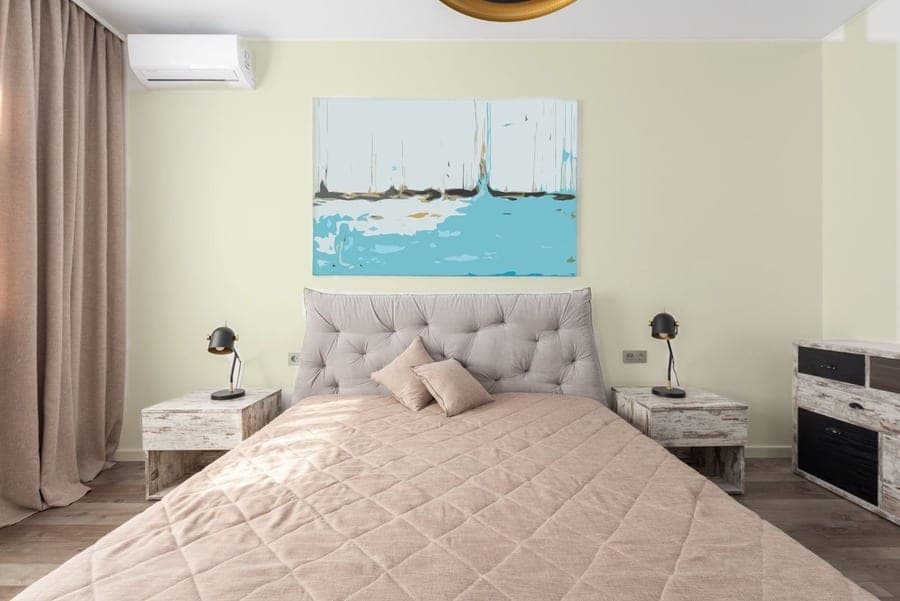
Yes, narrowly: Liveable Green's LRV of 61.194 clears the 60 that Sherwin-Williams recommends for north-facing rooms by about 1.2 points (Sherwin-Williams, read 14 October 2026). The company's neutral paint colors page says "North facing rooms tend to get the least amount of natural light" and advises that "To counteract the blue light in north facing rooms, look for a paint that has a 60 LRV or higher." So Liveable Green passes, but it passes the way a car passes inspection with one tire at the legal minimum. Softened Green, one step down the strip at 49.236, doesn't pass at all. The distinction matters because north light is bluish, and this color's whole character is a yellow lean. Blue light leans against yellow. In a bright north room with a wide window, the margin holds and you get a soft, slightly cool sage. In a small north room with one window and a tree outside it, the margin is thin enough that your bulbs do most of the work, which is the next question.
Does Liveable Green look different under 2700K and cooler bulbs?
Yes, and the difference is larger for this color than for most, because its personality lives on the yellow axis that bulb temperature moves. Energy Trust of Oregon describes 2700K as "a warm, yellow light" suited to living rooms, bedrooms and dining rooms, 3500K as "cool, white light" for kitchens and work spaces, and a brighter 5000K bulb as one that simulates a bright day, for reading lights and desk lamps; household bulbs run from about 2200K to 6500K, and higher numbers look cooler and bluer (Energy Trust of Oregon, read 14 October 2026). Put a yellow light on a color whose b value is already +8.45 and the yellow gets reinforced: Liveable Green goes warmer and cozier, closer to a pale khaki-sage. Put a 5000K light on it and the blue in the lamp pushes back against the yellow, so the green reads cooler and grayer. Neither is wrong. But if you fell for the chip under the store's lighting, check what's screwed into your own fixtures before you fall for it at home.
Liveable Green vs Softened Green: how big is one step down the strip?
One step down strip 213 takes you from Liveable Green at LRV 61.194 to Softened Green (SW 6177) at LRV 49.236, a drop of about 12 LRV points, and RoomCalm's on-screen distance between the two published hex values is 7.1, inside our "same family" band (Sherwin-Williams, read 14 October 2026). The move is mostly lightness: L 82.35 against 75.65. Softened Green is also a shade yellower, with a b of +10.51 to Liveable Green's +8.45, and a shade greener at a -4.05. So Softened Green is more than a darker copy. It's a touch richer and warmer, and it reflects noticeably less light. Sherwin-Williams describes it as evoking "a comforting, natural feel with this gentle green neutral" and suggests pairing it with Queen Anne's Lace (SW 6420). In practice the choice comes down to your light budget. Plenty of daylight, or warm 2700K lamps, and Softened Green has enough support to look like a color. Thin light and cool bulbs, and it starts to look like the wall went to sleep.
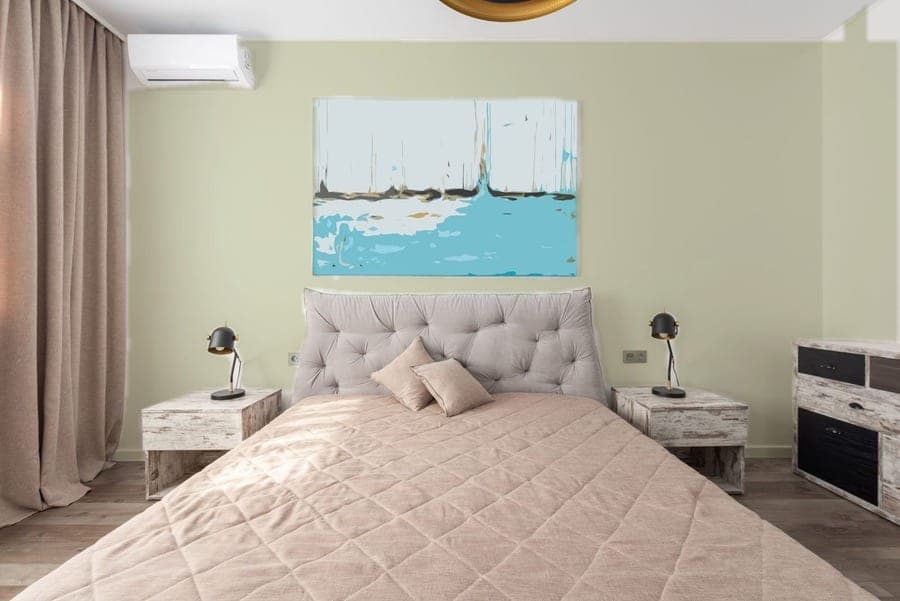
Open the free visualizer with Liveable Green loaded and see the one-step drop in your own room.
Try Liveable Green on your roomWhich rooms does Sherwin-Williams suggest for Liveable Green, and which would we skip?
Sherwin-Williams suggests Liveable Green for kitchens, bedrooms, living rooms and home offices, and says its "subtle yellow-gray undertones and gentle saturation help inject subtle personality into kitchens and bedrooms" (Sherwin-Williams, July 2026 Color of the Month page, read 14 October 2026). The same page calls it "perfect for light and dark spaces in your home." We'd agree on bedrooms and living rooms, because those are the rooms Energy Trust of Oregon pairs with 2700K bulbs, and warm light is where this color is at its best. Kitchens are a maybe. Energy Trust of Oregon pairs kitchens with 3500K, and light that cool drains some of the yellow and leaves a quieter gray-green; fine if that's what you wanted, a surprise if it isn't. The home office is where we'd pause. The same guide puts desk lamps at 5000K, and a daylight-white bulb a foot from a Liveable Green wall is the harshest test it can face. We'd also skip a windowless hallway or a dim basement stair, where there's no daylight for the LRV to work with and nothing warm to feed the undertone.
How does Liveable Green get along with oak floors, white trim and darker greens?
Liveable Green gets along with white trim and darker greens, and with oak if you break up the yellow, and Sherwin-Williams' own pairings cover the first two. For trim, the July 2026 page lists Alabaster (SW 7008), LRV 82.215, which sits about 21 LRV points above the wall and reads as a soft white rather than a stark one (Sherwin-Williams, read 14 October 2026). For a lighter neighbor, Sagey (SW 6175), one of Sherwin-Williams' coordinating colors for Liveable Green, at LRV 74.89 is 7.1 away on screen, a quieter version of the same idea; Shell White (SW 8917) is the brighter companion. For depth, Evergreen Fog (SW 9130) and Roycroft Bronze Green (SW 2846) both appear on Sherwin-Williams' coordinating lists, and we looked at Evergreen Fog alongside Olive Grove in that post. Oak floors are the pairing we'd think hardest about. Oak carries its own yellow, and Liveable Green's b of +8.45 leans the same way, so they won't argue, but two yellow-leaning surfaces can merge into one long khaki note. A pale rug between them breaks the handshake.
Why does Liveable Green sit so close to Accessible Beige on screen?
Liveable Green and Accessible Beige (SW 7036) are only 4.3 apart in RoomCalm's on-screen comparison, which puts a green and a beige in our "very close" band, and the reason is that both are muted, both lean yellow, and both sit in the same lightness range, LRV 61.194 against 57.67 (Sherwin-Williams, read 14 October 2026). The whole difference lives on one axis. Accessible Beige's published hex converts to an a of about +0.94 in our calculation, a hint of red; Liveable Green's a is -2.98 in Sherwin-Williams' Lab data, a hint of green. Everything else about them nearly overlaps, which is why a phone screen struggles to separate them and why both end up in the neutral aisle. On a wall the story shifts a little, because that small green hint is what you'd notice beside a beige sofa or a taupe rug, and a 4.3 on screen can feel like a clear choice in a room. If you're torn, our Accessible Beige post covers the beige side. The honest summary: Liveable Green is a beige that went for a walk in the garden.
Which other-brand paints land nearest Liveable Green in our catalog?
In RoomCalm's catalog the nearest are Benjamin Moore Edgecomb Gray (HC-173) at an on-screen distance of 3.4 and Farrow & Ball Skimming Stone (No. 241) at 3.6, both inside our "very close" band and neither one an equivalent. Those two hex values (#D4CBBA and #D3CABB) come from RoomCalm's own catalog, not from the brands' sites today, so treat them as a screen-level hint. Both are greiges rather than greens, which says something about Liveable Green itself: take away the small green lean and what's left is a warm light neutral, which is crowded territory. Sherwin-Williams' own similar-colors list stays in-house with Ancient Marble (SW 6162), Acanthus (SW 0029) and Useful Gray (SW 7050) (Sherwin-Williams, read 14 October 2026). If your painter's shop stocks one brand, our free paint color matcher runs the comparison on any code you type, and the Benjamin Moore vs Sherwin-Williams post covers how the catalogs differ. Then buy a sample of both. Numbers get you a shortlist; the wall picks.
| Shade | Code | Hex (on-screen approximation) | LRV (SW) | Distance from Liveable Green | What that means |
|---|---|---|---|---|---|
| Softened Green | SW 6177 | #BBBCA7 | 49.236 | 7.1 | Same family |
| Sagey | SW 6175 | #E2E2D1 | 74.89 | 7.1 | Same family |
| Accessible Beige | SW 7036 | #D1C7B8 | 57.67 | 4.3 | Very close |
| Clary Sage | SW 6178 | #ACAD97 | 40.959 | 12.6 | No real match |
| Shell White | SW 8917 | #F0EBE0 | 83.247 | 11.4 | No real match |
| Edgecomb Gray (Benjamin Moore) | HC-173 | #D4CBBA | n/a (catalog hex) | 3.4 | Very close |
| Skimming Stone (Farrow & Ball) | No. 241 | #D3CABB | n/a (catalog hex) | 3.6 | Very close |
Type any paint code and get its closest neighbors across brands, free.
Open the paint color matcherWhen does Liveable Green lose its green?
Liveable Green loses its green in cool light and thin light: under bulbs in the 3500K to 5000K range, or in a dim north-facing room, the yellow lean that gives it its warmth gets cancelled and the wall can read as flat gray-khaki. The numbers say why. Its LRV of 61.194 clears Sherwin-Williams' 60 threshold for north rooms by about 1.2 points (Sherwin-Williams, read 14 October 2026).
A 1.2-point margin is a rounding error with a paint code.
Add a daylight-white bulb and the two things this color needs, warm light and enough of it, go missing at once. The second gap belongs to screens, ours included: a visualizer can show the color in your room, but it can't set real paint beside your actual floor, so the oak-plus-khaki risk from earlier never shows up on a phone. If your room is bright or your lamps are 2700K, none of this applies to you. If it's north-facing with cool LEDs, buy the sample before the gallon and look at it after dark.
What's the fastest way to see Liveable Green under your own lamps?
The fastest way is RoomCalm's free paint color visualizer with Liveable Green already loaded: upload a photo of your room and the walls repaint in SW 6176 in your own light before your coffee cools. It's free and unlimited, there's no sign-up, and it runs in the browser, so the photo never leaves your device. Switch to Softened Green to see the one-step drop in the same room. What you get is an on-screen approximation: your screen, your camera's white balance and the bulb you shot under are all baked in, which happens to be useful, because the bulb question is the one this color hinges on. Take one photo at midday and one at night with the lamps on, and compare. What it can't do: show sheen, paint only the trim, or handle exteriors, even though Sherwin-Williams rates Liveable Green for outside use. It also can't replace a sample pot. Use it to shortlist, then let the wall vote.
See Liveable Green on your own walls, free, no sign-up.
Open the visualizer with SW 6176Work out how many gallons the room needs before you buy.
Paint calculatorWant a deeper green from the same brand? Read our Pewter Green breakdown.
Sherwin-Williams Pewter GreenQuick answers
What is the LRV of Sherwin-Williams Liveable Green?
Liveable Green (SW 6176) has a published LRV of 61.194 (Sherwin-Williams, read 14 October 2026). That clears the 60 Sherwin-Williams suggests for north-facing rooms, but only by about 1.2 points, so it's a light color with little room to spare in dim spaces.
Is Liveable Green a warm or a cool green?
Liveable Green is a cool green with a warm yellow-gray undertone, in Sherwin-Williams' own words, and its Lab values show a small green lean (a -2.98) and a larger yellow lean (b +8.45). Warm 2700K bulbs bring out the yellow and make it cozier; cooler 3500K to 5000K bulbs bring out the gray-green.
Liveable Green vs Softened Green: which is darker?
Softened Green (SW 6177) is darker, with an LRV of 49.236 against Liveable Green's 61.194, about 12 points lower. It's also slightly yellower and greener. The two sit one step apart on Sherwin-Williams store strip 213, and RoomCalm's on-screen distance between them is 7.1, the same family.
Does Liveable Green work in a north-facing room?
Liveable Green works in a north-facing room, narrowly: its LRV of 61.194 is just above the 60 Sherwin-Williams recommends for north-facing rooms, which get the least natural light and a bluish cast. In a dim north room with cool bulbs it can go flat and gray-khaki, so test a sample on the wall and look at it after dark with your own lamps on.
Is there a Benjamin Moore color close to Liveable Green?
Edgecomb Gray (HC-173) is the closest in RoomCalm's catalog, at an on-screen distance of 3.4 using catalog hex values, which is very close but not an equivalent. Edgecomb Gray's hex leans beige rather than green, so the small green hint in Liveable Green is what you'd lose. Compare samples of both on your wall before choosing.