Journal · By Anas · Updated August 22, 2026 · 7 min read
Gothic Home Decor: How to Do Dark Rooms Properly (2026)
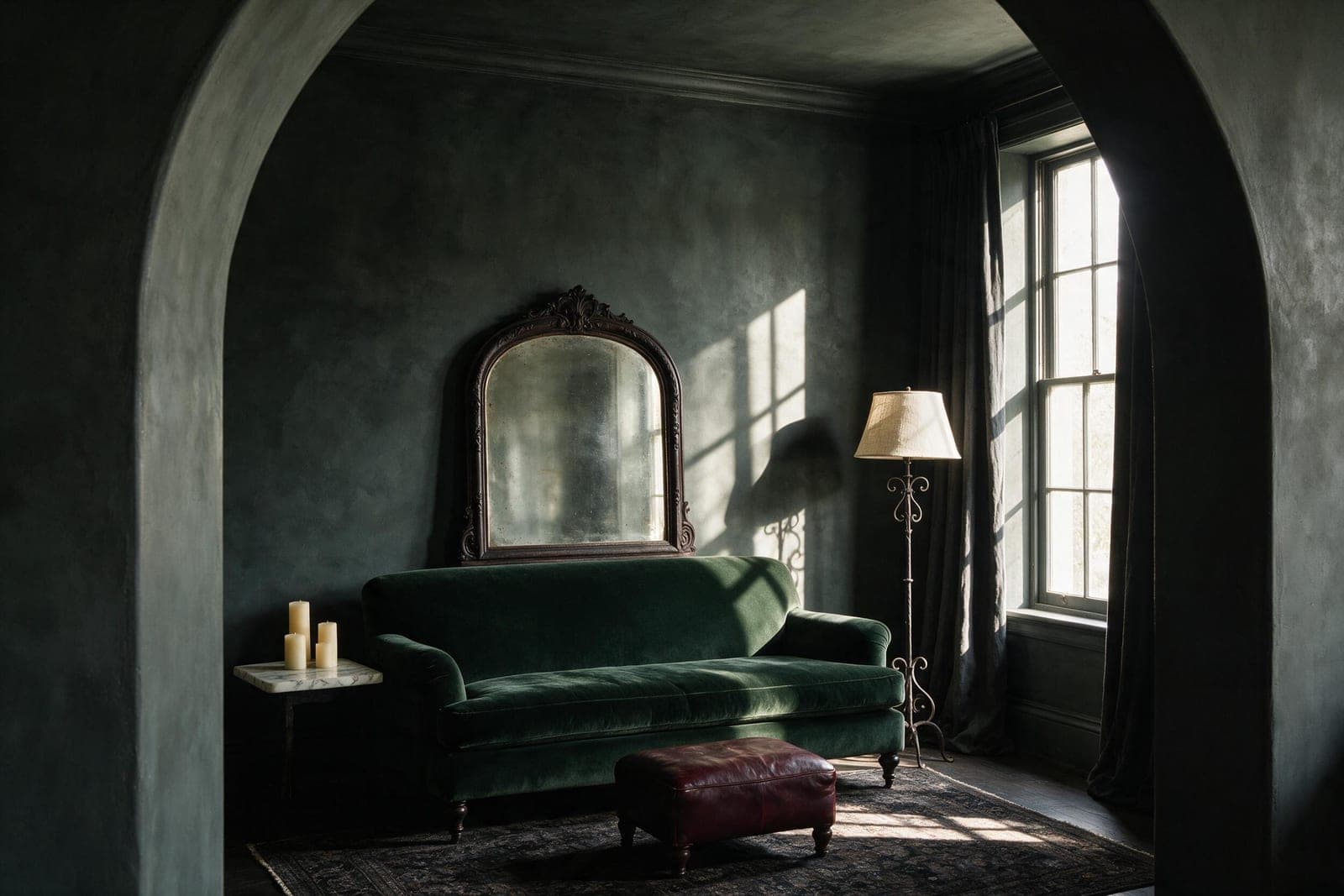
There is a specific moment that puts people off gothic decor forever. They paint one wall black, hang something ornate, add candles, step back, and the room looks like a themed restaurant. Not moody. Not romantic. Just costumed.
The rooms that get it right are doing something quite different, and it is almost never the thing beginners copy. It is not the colour. Plenty of beautiful gothic rooms are barely black at all.
What is gothic home decor?
Gothic home decor is a dark, romantic style built on ornament, depth and old-world craft. Its vocabulary comes from Gothic Revival architecture and Victorian interiors: pointed arches, carved and turned wood, wrought iron, brass, velvet and brocade, heavy drapery, portraits and mirrors in ornate frames, candlelight rather than overhead light.
The important part is that the darkness is a backdrop, not the subject. Black paint on its own gives you a dark room, which is a completely different and much sadder thing. What makes a room read gothic is what the darkness is holding: shape, pattern, age and detail.
Gothic home decor vs dark academia
These get mixed up constantly and they want different things from you.
Dark academia is scholarly. Books, tweed, leather, brass desk lamps, framed anatomical prints, a room that looks like someone reads in it. The mood is studious and warm.
Gothic is romantic and ornamental. Arches, carving, iron, velvet, mirrors, candles, a room that feels a little theatrical on purpose. The mood is atmospheric rather than industrious.
There is a large overlap, and most real rooms sit somewhere between them. But if you are choosing what to buy next, the question is simple: are you adding books and study, or are you adding shape and drama?
The scholarly cousin, if books and warm leather are what you actually keep picturing.
Read the dark academia guide →The four things that make gothic decor look expensive
This is the part that separates a genuinely beautiful dark room from a costume.
- ·ORNAMENT, not just colour. Something in the room has to have a shape worth looking at: a carved frame, a turned leg, an arched mirror, iron scrollwork. Flat modern furniture painted black just reads as flat modern furniture painted black.
- ·TEXTURE, heavily layered. Dark colours absorb light, so a dark room without texture goes visually dead. Velvet, brocade, aged brass, wrought iron, worn leather, stone, dark timber. You want at least four things the eye can feel.
- ·SOMETHING PALE for relief. Almost every gothic room that works has one light element: a pale marble surface, an aged mirror, cream candles, a bone-coloured lampshade. Without relief the room flattens into a single dark mass.
- ·AGE. Gothic is the least forgiving style for brand-new-everything. One genuinely old or old-looking piece does more than five new gothic-themed purchases.
How to light a dark room so it feels rich, not gloomy
This is where most attempts fail, and it is worth being precise, because the instinct is exactly backwards.
A dark room needs MORE light sources than a pale one, not fewer. Pale walls bounce light around a room for free. Dark walls absorb it, so every pool of light has to be created deliberately. One ceiling light in a dark room gives you a gloomy cave with a hot spot in the middle.
What works is three or four small warm sources at different heights, none of them on the ceiling: a table lamp, a floor lamp, a wall sconce, candles. Keep the bulbs warm, around 2700K. The room should read as a series of glowing pockets with shadow in between, which is exactly the atmosphere people are chasing when they search for this style in the first place.
It is worth knowing that going dark is a legitimate strategy rather than a compromise. Designers describe two valid approaches to a dark room: brighten it by raising the light reflectance of the walls and adding layered light, or lean in and cocoon it with deeper tones and warm pooled light. Gothic decor is the second approach done deliberately. What it is not is the second approach done accidentally, which is just a badly lit room.
Goth home decorating in a rental
You do not need to paint anything, which surprises people. Dark rooms are usually built from soft furnishings anyway, and those all move out with you.
Start with the window. Heavy floor-length curtains in a deep colour change a room more than paint does, and they are the single most gothic thing you can buy. Then bedding or upholstery in velvet, a dark patterned rug, and one ornate mirror leaning against a wall rather than hung.
After that it is lamps and candle holders in aged brass or black iron, and art in ornate frames. Charity shops and marketplace listings are genuinely better sources than new shops here, because age is the ingredient you cannot buy new.
Gothic living room and bedroom ideas
In a living room, the sofa is your anchor and it does not have to be black. Deep green, oxblood, aubergine and charcoal all read gothic and are far easier to live with. Put it on a dark patterned rug, add an ornate mirror above whatever the room's focal wall is, and light it with two lamps and no ceiling light.
In a bedroom, the bed carries the whole style. A tall carved or iron headboard does most of the work on its own. Layer the bedding in one colour family so it reads rich rather than busy, hang curtains high and wide so the window feels tall, and keep two warm bedside lamps for symmetry. Bedrooms are also where the pale relief element matters most, because it is the room you are in when your eyes are tired.
The mistakes that make gothic look like a Halloween store
- ·Themed props instead of furniture. Skulls, plastic ravens and cobweb textiles are costume, not decor. One genuinely beautiful ornate object beats ten spooky ones.
- ·Black everything with no variation. Real dark rooms use several deep colours, not one. Charcoal, forest, oxblood and aubergine together read expensive; flat black everywhere reads like a box.
- ·New and shiny. Gloss black plastic and shiny new hardware fight the style. Aged, matte and worn is the whole point.
- ·A single overhead light. Covered above, and it is the fastest way to make a considered dark room look grim.
- ·No empty space. Ornament needs quiet around it or the eye cannot land anywhere. Dark and crowded is the combination that tips into oppressive.
See your own room in gothic, before you buy anything
The hard part of any dark style is that you genuinely cannot picture it. A colour that looks rich on a screen can turn a real room into a cave, and it depends entirely on how much light your room already gets, which way it faces, and what is already in it.
That is what RoomCalm is for. Upload a photo of your actual room and it restyles that room, keeping your windows, your walls and your own furniture, so you are looking at your real space gone dark rather than someone else's. First one is free and there is no sign-up.
Your room, your things, with the drama turned up.
See my room dark and romantic →Quick answers
What is gothic home decor?
Gothic home decor is a dark, romantic interior style built on ornament, depth and old-world craft, drawing on Gothic Revival architecture and Victorian interiors. Its signatures are arches, carved wood, wrought iron, brass, velvet and brocade, heavy drapery, ornate mirrors and frames, and candlelight rather than overhead lighting. The darkness is a backdrop for the ornament, not the point in itself.
What is the difference between gothic decor and dark academia?
Dark academia is scholarly: books, tweed, leather, brass desk lamps and a room that looks like someone studies in it. Gothic is romantic and ornamental: arches, carving, iron, velvet, mirrors and candles, with a deliberately theatrical mood. They overlap heavily, but gothic adds shape and drama while dark academia adds books and study.
How do you make a dark room feel cosy instead of gloomy?
Use more light sources than you would in a pale room, not fewer, because dark walls absorb light instead of bouncing it. Three or four small warm sources at different heights, around 2700K, with no single ceiling light, create pools of glow with shadow between them. Add one pale element such as marble, an aged mirror or cream candles so the room has visual relief.
Can you do gothic home decor in a rental without painting?
Yes, and most of the style lives in soft furnishings anyway. Heavy floor-length curtains in a deep colour change a room more than paint does, then add velvet upholstery or bedding, a dark patterned rug, an ornate mirror leaning rather than hung, aged brass or iron lamps, and art in ornate frames. Everything moves out with you.
What colours are used in gothic decor besides black?
Deep green, oxblood, aubergine, charcoal and inky navy all read gothic and are considerably easier to live with than flat black. Using several deep colours together looks richer and more expensive than painting everything one shade of black, which tends to flatten a room into a single dark mass.