Journal · By Anas · Updated August 22, 2026 · 7 min read
Dark Academia Room Ideas — Moody, Cozy, Never Gloomy
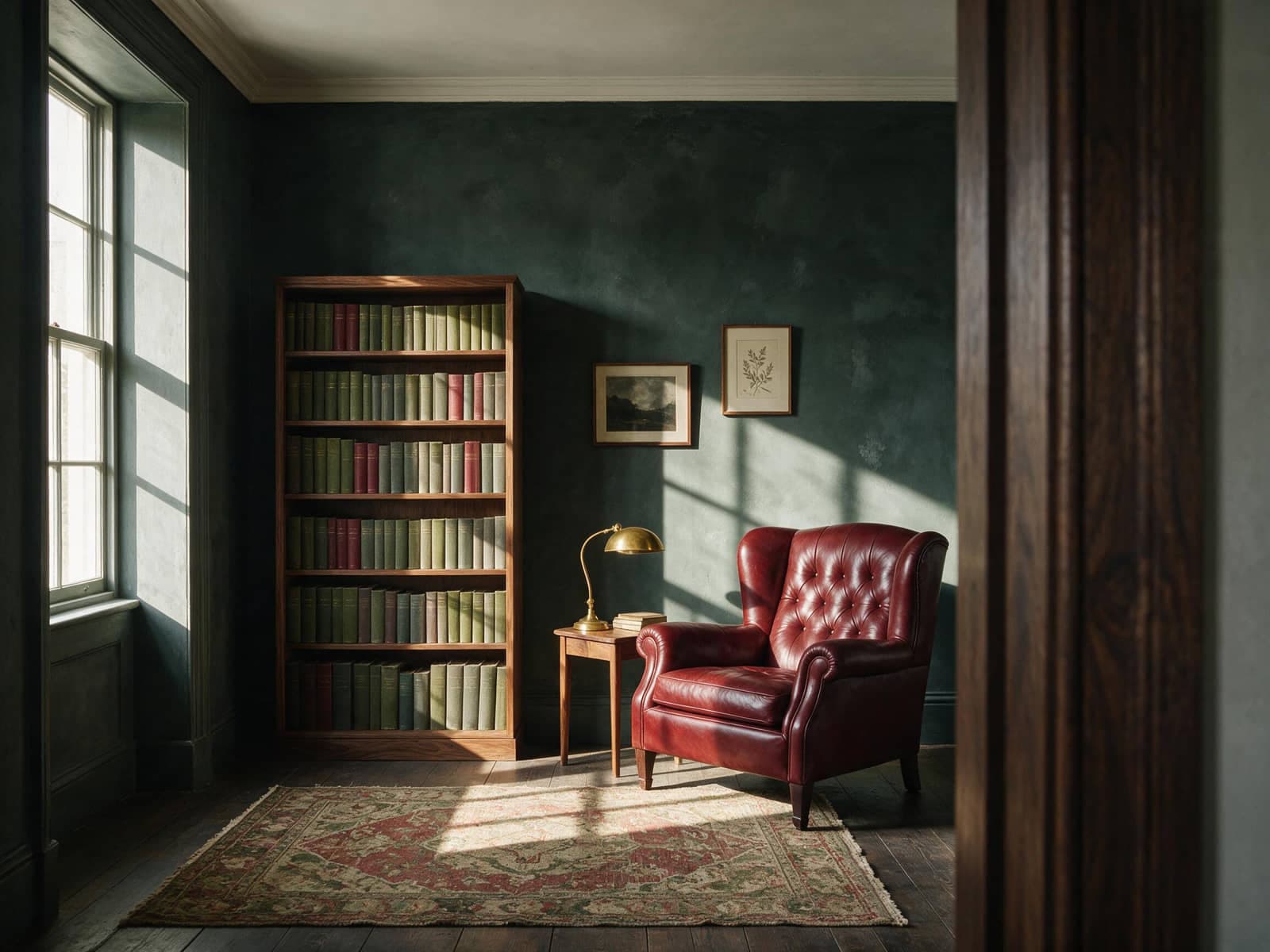
Dark academia is the style for people whose happy place is a library in October: deep green walls, shelves of well-read books, a leather chair under a pool of lamplight, rain doing its thing outside. It is moody on purpose — that's the whole appeal — and that is also the honest risk. Get it right and the room feels like the inside of a good novel. Get it wrong and it feels like a basement with literary ambitions. The difference comes down to a handful of rules, and the most important one is about light, not color. Here's the whole thing, including the parts most guides skip.
What is dark academia, exactly?
It started as an internet aesthetic — it grew up on Tumblr in the mid-2010s and exploded on TikTok in 2020 — built on a romance with old universities: libraries, tweed, handwritten letters, autumn on a campus quad. As a room style, though, it borrows from a much older tradition: the English study and the private library, which people have been making cozy for a few centuries. That lineage matters, because it means dark academia isn't really about darkness. It's about warmth in low light — the feeling of being tucked into a corner with a book while it rains on someone else.
One clarification before we start: dark academia and 'just paint everything black' are different projects. The style runs on warm, deep, natural colors and materials with some age in them. True black and cold grey are actually rare in the best versions of this look.
The palette: candlelight colors, not black
Every color in a dark academia room should look good by lamplight — that's the test. Deep forest and bottle green, oxblood and burgundy, walnut and chestnut brown, warm brass, and — this part gets forgotten constantly — plenty of aged cream: parchment, old paper, ivory lampshades. The cream matters more than any of the dark shades, because it's what your eye rests on. A room that's dark wall-to-wall with no pale notes reads heavy; a dark room threaded with warm cream reads like a library.
The lamplight rule: the one thing that decides cozy or gloomy
Here is the single most important sentence in this guide: dark walls under one bright ceiling bulb feel like a basement, and the exact same walls beside three warm lamps feel like a library. Dark colors swallow overhead light and give nothing back, which is why so many people paint a moody green, look at it under their old ceiling fixture, and panic. The color was never the problem. Dark academia rooms are lit low and warm, in pools — a reading lamp by the chair, a small lamp on the shelf, a candle or two in the evening. The darkness is the backdrop; the pools of light are the room.
- ·Use warm bulbs — 2700K or lower — everywhere. One cool-white bulb makes the whole room feel damp.
- ·Three light sources minimum: a reading lamp, a table or shelf lamp, and something low — a candle, a small lamp on a stack of books.
- ·Keep the ceiling and trim lighter than the walls, so the room doesn't close in overhead.
- ·Add one brass or mirror moment near a lamp — dark rooms need a little glint to feel alive.
- ·Let daylight in during the day. Moody is for evenings; a dark room that also blocks its own window tips into gloomy fast.
The signatures
- ·Books — real ones, stacked and shelved and visibly read. This style cannot be faked by buying books by color.
- ·Dark wood — a desk, a shelf, a side table; walnut and stained oak, matte rather than glossy.
- ·One serious chair — leather, tweed or velvet, with a lamp and a side table beside it: the reading corner is the heart of the room.
- ·Brass — lamp bases, candlesticks, a picture light over a frame.
- ·Old art in old frames — portraits, botanical plates, moody landscapes; thrifted frames do half the work.
- ·Heavy curtains and a rug with some age — the room should feel upholstered against the weather.
Get the look with what you already own
Start with your bookshelves, because you probably own the most important ingredient already. Take the books off, dust them, and put them back as a display: some upright runs, some horizontal stacks, a candlestick or a small frame between them, spines honestly worn and facing out. Then walk the rest of the house and gather anything wood, brass, leather or deep green into one room — a tray, a lamp, an old atlas, your grandmother's candlesticks. Dark academia is nearly as thrift-friendly as cottagecore: the whole aesthetic is built on things that look like they've been owned a long time, which is exactly what secondhand shops sell.
The affordable pieces that carry it
- ·Paint, if you're allowed — one deep green or burgundy wall is the biggest single lever, and paint is the cheapest drama there is.
- ·A brass or dark-shaded table lamp — the style's real engine, so spend here first.
- ·A secondhand leather or tweed chair — scuffs are a feature; this is the rare style where worn beats new.
- ·Old frames from the thrift shop, filled with vintage botanical plates or portraits.
- ·Heavy dark curtains and a vintage-look rug — both age a room instantly, in the good way.
Renting, or stuck with white walls? Do dark academia lite
You can build the whole feeling without paint. Keep the white walls and put the darkness in the things instead: the bookshelf styled properly, a deep green throw and cushions, the leather chair, brass lamps with warm bulbs, old frames leaning on a shelf rather than nailed to the wall. White walls with dark, storied objects reads as a scholar's apartment — genuinely a version of the look — and every piece moves out with you.
Small or north-facing room? The honest answer
Here's the part most dark academia content skips. In a small room, deep color can actually work beautifully — dark walls blur the corners and turn the room into a cocoon rather than a box — but only if you commit to the lamplight rule above. What dark academia will never do is make a small room feel bigger or brighter. If that's what you need from this room — if it's where you work all day, or it catches the only daylight you get — keep the walls pale and do the lite version instead. A style should serve the life in the room, not the other way round.
Love old, storied things but want them sunnier — faded florals and soft linen instead of leather and lamplight? Dark academia has a gentler sister.
Read: The Cottagecore Guide →Or the darker cousin: less study and tweed, more arches, iron, velvet and candlelight. Same low light, different intent.
Read the gothic home decor guide →The costume trap
Every strong aesthetic has one, and dark academia's is the prop room: decorative skulls, a typewriter nobody has ever typed on, 'aged' books bought by the crate as set dressing. The test is the same one that works for farmhouse and coastal: a real scholar's room doesn't announce itself. If you actually read in the chair, the room is dark academia. If the chair exists for photos, it's a costume — and you can feel the difference from the doorway.
Is dark academia your style?
If your ideal evening is a lamp, a blanket and a book — and bright, busy, sun-blasted rooms leave you strangely restless — this is probably your corner of the style map. Torn between this and something softer or warmer? Seven quick questions settle it.
Answer seven quick questions and see which style keeps matching how you want home to feel.
Take the free Room Style Quiz →See your room, dark academia edition
The fastest way to know whether your room can carry the moody look is to see it. Upload a photo to RoomCalm, pick Dark Academia, and see your own space in deep green, brass and lamplight — free, no sign-up, your real room and furniture kept, in under a minute — plus the first thing to change.
See your own room in dark academia — free, no sign-up.
Try it on your room →Quick answers
What is dark academia style?
Dark academia is a moody, bookish interior style built on the look of old libraries and universities: deep greens and browns, real books on display, leather and tweed, brass lamps and low warm light. It began as an internet aesthetic but borrows its design rules from the classic study and private library.
What colors are dark academia?
Deep forest and bottle green, oxblood and burgundy, walnut brown, warm brass and plenty of aged cream — parchment, ivory, old-paper tones. The test: every color should look good by lamplight. True black and cold grey appear far less than people expect.
How do I make a dark academia room cozy instead of gloomy?
Fix the lighting, not the colors. Dark walls under one bright ceiling bulb read as a basement; the same walls with three warm lamps (2700K bulbs or lower) read as a library. Add aged-cream accents for the eye to rest on, keep the ceiling lighter than the walls, and let daylight in during the day.
Does dark academia work in a small room?
Yes, with a caveat. Deep color can make a small room feel like a cocoon — dark walls blur the corners — but it will never make it feel bigger or brighter. If you need the room light and open by day, keep the walls pale and build the look through books, dark textiles, brass lamps and a leather chair instead.
Can renters do dark academia without painting?
Easily. Style the bookshelves properly, add a deep green throw and cushions, a secondhand leather or tweed chair, brass lamps with warm bulbs, and old frames leaned on shelves instead of nailed to walls. White walls with dark, storied objects read as a scholar's apartment — and everything moves out with you.