By Anas · Updated October 17, 2026 · 5 min read
Minimalist Interior Design Guide — Calm, Clutter-Free Rooms
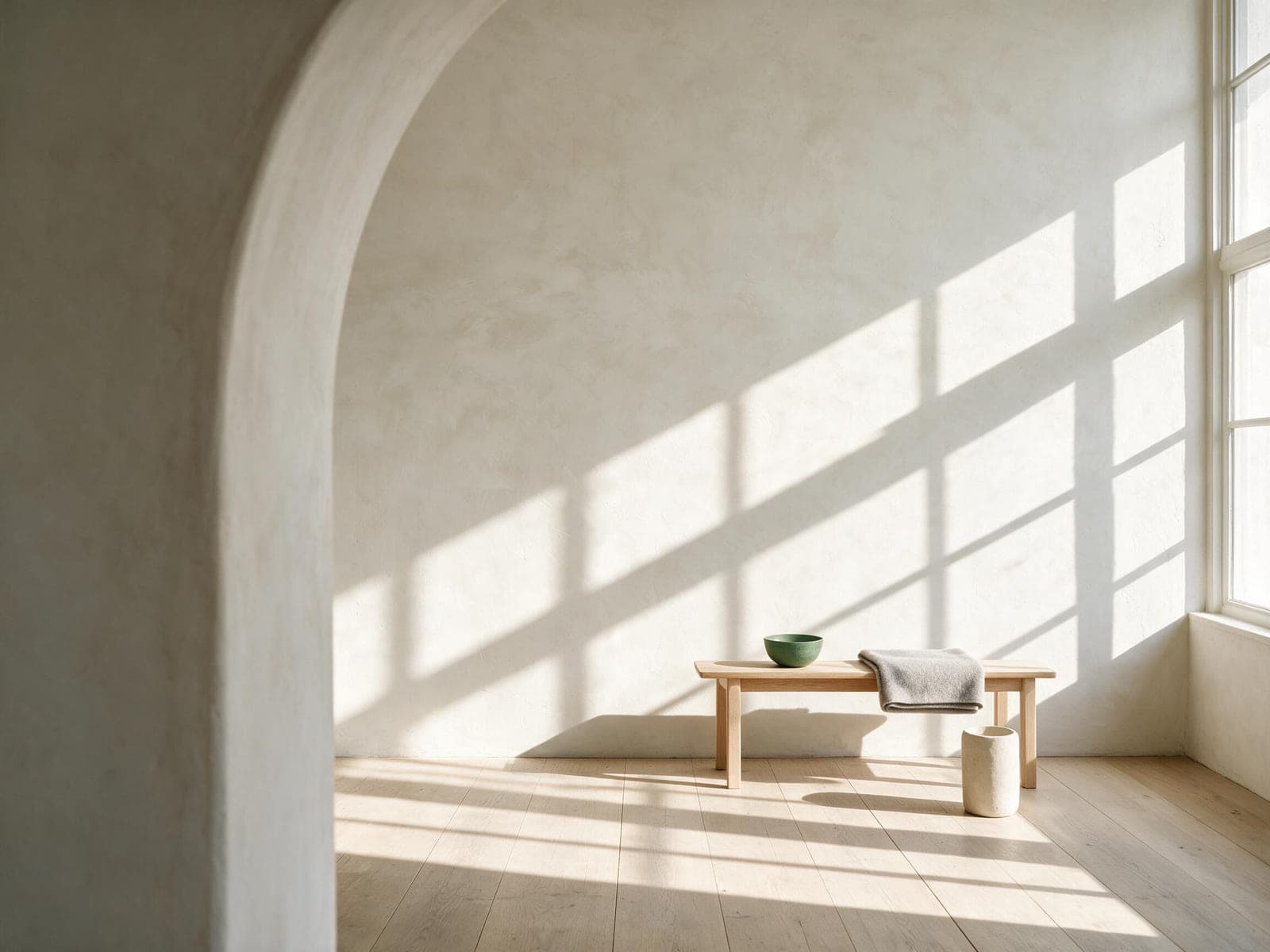
- Warm white,
- Soft grey,
- Pale oak,
- Sage
Minimalist interior design means keeping only the things that earn their place and giving everything else a home out of sight, so the room reads calm and clear. Done well it's warm, not bare: warm whites, pale wood, one muted accent and a lot of closed storage.
Minimalism gets a cold reputation it doesn't deserve. Done badly, it's a bare, echoing box. Done well, it's the calmest room in the house — uncluttered, intentional, and quietly warm. The difference is warmth and editing, not emptiness for its own sake.
Why does minimalism feel calming?
Minimalism feels calming because a room with fewer things on show gives your eyes less to sort through. A 2011 brain-imaging study in The Journal of Neuroscience found that objects in view at the same time compete for the visual system's limited processing capacity, so every extra thing on a shelf costs a little attention. That was measured on a lab screen, not in a living room, so treat the jump as a sensible bet rather than a proof. The mood side of clutter has its own article. Clearing the visual noise frees that bandwidth, which is why a tidy, pared-back room can feel like a deep breath.
What colors suit a warm minimalist room?
Warm whites, soft greys and pale oak suit a warm minimalist room far better than stark white, which is where the hospital feeling comes from. They keep the room serene without making it clinical. Add a single muted accent — a clay cushion, a sage throw — so the calm still has a pulse. Warm it a little further with wood and wabi-sabi and you're in Japandi territory.
Not sure whether you're a true minimalist or you just crave calm? Seven quick questions will name your style — no forms, no email.
Take the free Room Style Quiz →Furniture: fewer, better, lower
- Clean lines and honest materials
- Low, simple silhouettes that don't crowd the eye
- Nothing purely decorative that doesn't also earn its keep
- Generous space around each piece
Storage is the secret weapon
Minimalism looks effortless because the mess has somewhere to go. Hidden storage — closed cabinets, baskets, a bench that opens — lets the visible surfaces stay clear. You're not getting rid of everything; you're giving it a home out of sight.
Style with restraint
Group the few objects you keep in small clusters with breathing room, mix in one plant and one natural texture, and stop before it feels full. In minimalism, knowing when to stop is the skill. Texture does most of the warming in a pared-back room — how to use texture shows how to add depth without adding stuff.
- Warm modern: the same restraint with softer materials, if minimalism reads a little severe to you
- What is Japandi style?: minimalism with a heartbeat — warmth and nature woven into the same calm
See your room, simplified
When someone wants their space to feel calm and clear, minimalism is often RoomCalm's answer. Upload your room, tell us you want calm, and we'll show you the pared-back version — plus exactly what to clear first.
Free, no sign-up, with your real room and as much of your own furniture kept as you choose — you just see it with less around it.
See my room, simplified →Quick answers
Does minimalist design have to feel cold?
No, and the cold reputation comes from doing it badly. Stark white walls, hard surfaces and nothing soft give you a bare, echoing box. Warm whites, soft greys and pale oak keep a pared-back room serene without the hospital feeling, and a single muted accent like a clay cushion or a sage throw gives the calm a pulse.
How do I know when to stop decorating a minimalist room?
Stop before it feels full. Group the few objects you keep in small clusters with breathing room around them, add one plant and one natural texture, and then put the next thing back in the cupboard. Knowing when to stop is the actual skill in minimalism, and most rooms go wrong one object past the right moment.
Do I have to get rid of everything to be a minimalist?
No, you have to give it a home out of sight. Minimalism looks effortless because the mess has somewhere to go: closed cabinets, baskets, a bench that opens, a wardrobe that shuts. The visible surfaces stay clear while your actual life stays in the room. Edit what genuinely doesn't earn its keep, then store the rest behind a door.
What should I try if minimalism feels too severe for me?
Warm modern or Japandi, depending on what's missing. Warm modern is the same restraint with softer materials, so it suits you if the empty feels right but the hard edges don't. Japandi is minimalism with a heartbeat, warmth and nature woven into the same calm. Both keep the editing; they change the temperature.
Can RoomCalm show me what to clear from my room first?
Yes, upload a photo, tell it you want calm, and it shows the pared-back version of your actual room along with what to clear first. It's free with no sign-up and keeps your real room and as much of your own furniture as you choose; you just see it with less around it. What it can't do is carry the boxes to the garage, so treat the picture as the plan, not the work.