Journal · By Anas · Updated August 21, 2026 · 5 min read
What Is Japandi Style? A Complete Guide (2026)
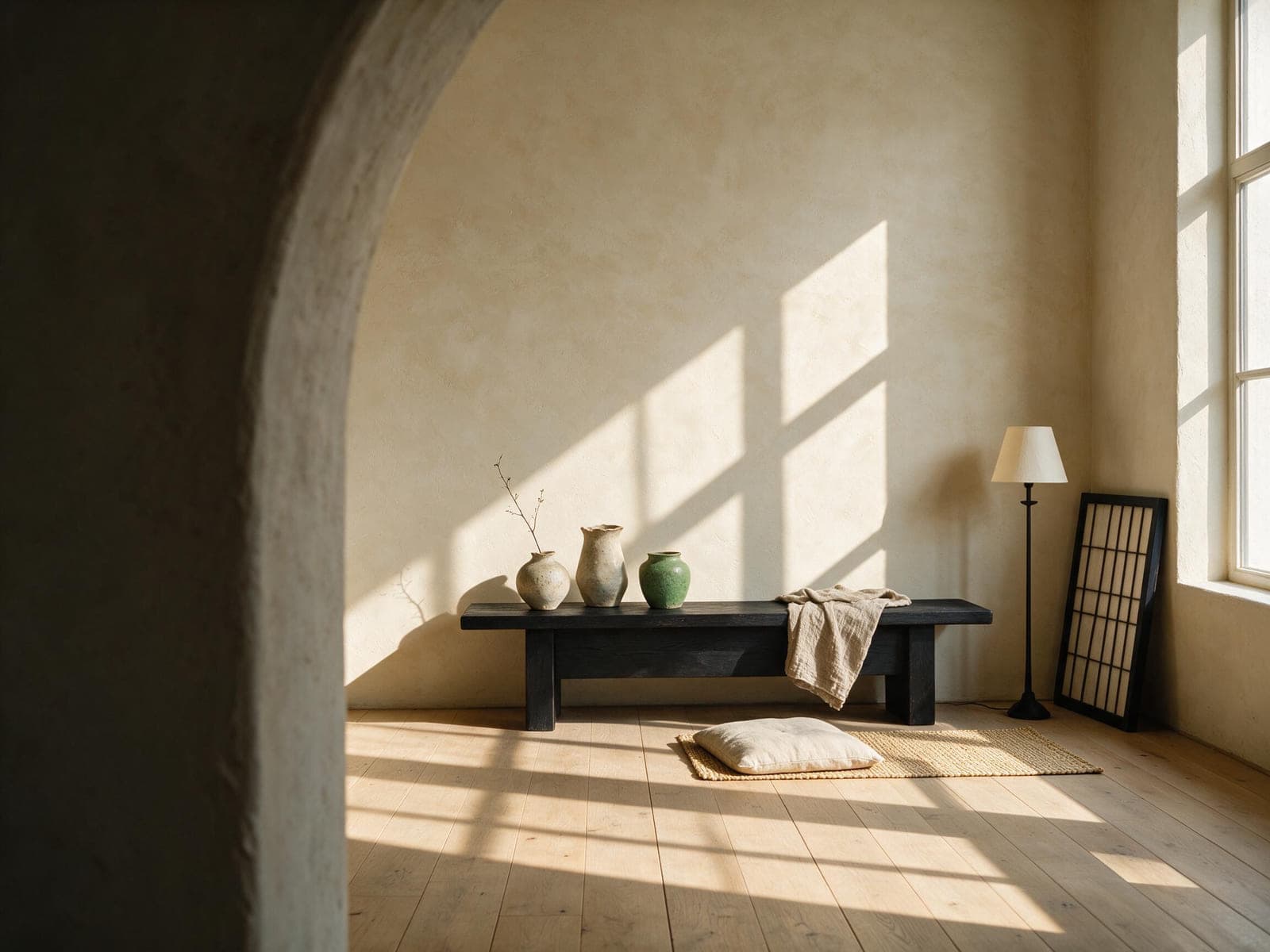
Japandi is one of those styles that's easy to feel and hard to define. Walk into a Japandi room and you exhale — it's calm and uncluttered, but warm and lived-in, not the chilly emptiness minimalism can fall into. That balance is the whole point.
Where Japandi comes from
The name is a portmanteau: Japanese plus Scandinavian. From Japan it takes wabi-sabi — the beauty of imperfect, natural, quietly aged things — and a respect for empty space. From Scandinavia it takes hygge — warmth, comfort, soft textiles and a love of natural light. Put them together and you get serenity with a heartbeat.
The Japandi color palette
Think muted and earthy: warm whites, oatmeal, soft greige, clay and sage, grounded with the occasional black accent. Nothing shouts. Colors sit in the same quiet family so the eye relaxes.
Easier to judge on your own walls than in someone else's photo. Upload a room and see it in this palette — free, no sign-up, and it keeps your actual furniture.
See my room in Japandi →Materials matter more than anything
- ·Natural wood — light oak, ash, walnut — usually in matte, honest finishes
- ·Linen, cotton and wool in undyed, natural tones
- ·Handmade ceramics and stoneware, imperfections welcome
- ·Rattan, paper, stone and other organic textures
The trick is layering several natural textures so a neutral room feels rich rather than flat.
Furniture and layout
Japandi furniture is low, clean-lined and functional, with nothing decorative-for-decoration's-sake. Leave generous space around each piece — the emptiness is deliberate. Choose fewer, better things and let them breathe.
Japandi vs Scandinavian vs minimalist, side by side
These three get used interchangeably and they are not the same room. The quickest way to tell them apart is to look at how warm the palette is and how much is allowed to sit on a surface.
| Japandi | Scandinavian | Minimalist | |
|---|---|---|---|
| Palette | Warm neutrals, clay, sage, one black accent | Bright whites and pale woods | White, grey, black |
| Wood tones | Light oak through walnut, matte | Pale birch, ash, beech | Often no wood at all |
| Textiles | Linen, wool, undyed cotton | Layered throws, sheepskin, pattern | Minimal, flat, plain |
| How full | Deliberately sparse | Cosy, comfortably filled | Sparse and hard-edged |
| Feels | Calm and warm | Cosy and bright | Ordered, can feel cold |
- Test a Japandi shade on your own wall: free and unlimited — it runs in your browser, nothing is uploaded
- Build a whole-home palette: every room agreeing with your light and your floors, one room free
- Read: Minimalist Interior Design Guide: if it's the 'less' half of Japandi that speaks to you, the quieter cousin
How to get the Japandi look
- ·Declutter first — Japandi cannot exist alongside mess
- ·Warm the palette to oat, greige and clay; add one black accent
- ·Bring in light oak or walnut and plenty of linen
- ·Add one or two handmade ceramic pieces and a single sculptural plant
- ·Layer soft, diffused lighting — never one harsh overhead bulb
Try Japandi on your room
Japandi is one of RoomCalm's core styles — and often the one we choose when someone wants their bedroom to feel calm without feeling cold. Upload a photo, tell us you want calm, and see your actual room reimagined the Japandi way.
See your own room in Japandi — free, no sign-up, and your real room and furniture stay yours.
Try Japandi on your room →Dressing the walls too? Eight Japandi prints that belong together, the real paint codes behind them, and the hanging measurements — one kit, print it forever.
The Japandi Kit — 8 printable wall art prints, $14 →Quick answers
What is the difference between Japandi and minimalism?
Minimalism removes; Japandi removes and then warms what is left. A minimalist room can be correct and still feel cold — white, hard, a little unforgiving. Japandi keeps the same restraint about quantity but insists on natural texture and warmth in what survives the edit: oak, linen, clay, a handmade bowl with a visible thumbprint. Same emptiness, different temperature.
What is the difference between Japandi and Scandinavian style?
Scandinavian style is Japandi's warmer, busier half. Scandi leans bright and cosy — pale woods, white walls, plenty of soft layers, and it tolerates more objects on a shelf. Japandi takes that palette and applies Japanese restraint to it: darker and earthier tones, lower furniture, fewer things, and deliberate empty space that Scandi would usually fill with a throw or a plant.
What colours work for a Japandi room?
Warm whites, oatmeal, soft greige, clay and sage, with one black accent to anchor the room. The rule that matters more than the exact shades: keep every colour in the same quiet family so nothing competes, and let the wood tones do the work that a bold colour would do in another style. If a shade would look loud on a paint chip, it is not Japandi.
Can you do Japandi in a rental without painting?
Yes, and it is one of the few styles that genuinely survives the constraint, because Japandi is carried by texture and restraint rather than wall colour. Clear the surfaces first — decluttering is doing most of the work. Then add natural fibres you can take with you: a jute or wool rug, linen curtains hung high, undyed cotton bedding, one or two handmade ceramics, and warm low lighting instead of the overhead bulb.
Is Japandi still in style?
It has proved more durable than most named looks, for a structural reason rather than a fashionable one: it is built on natural materials and empty space, neither of which dates the way a colour trend or a specific furniture silhouette does. A Japandi room from five years ago mostly still reads as calm rather than as a period. That said, we would rather you pick it because the rooms make you exhale than because anyone says it is current.