Journal · By Anas · Updated August 21, 2026 · 5 min read
Biophilic Design Guide — Bring Nature Home & Lower Stress
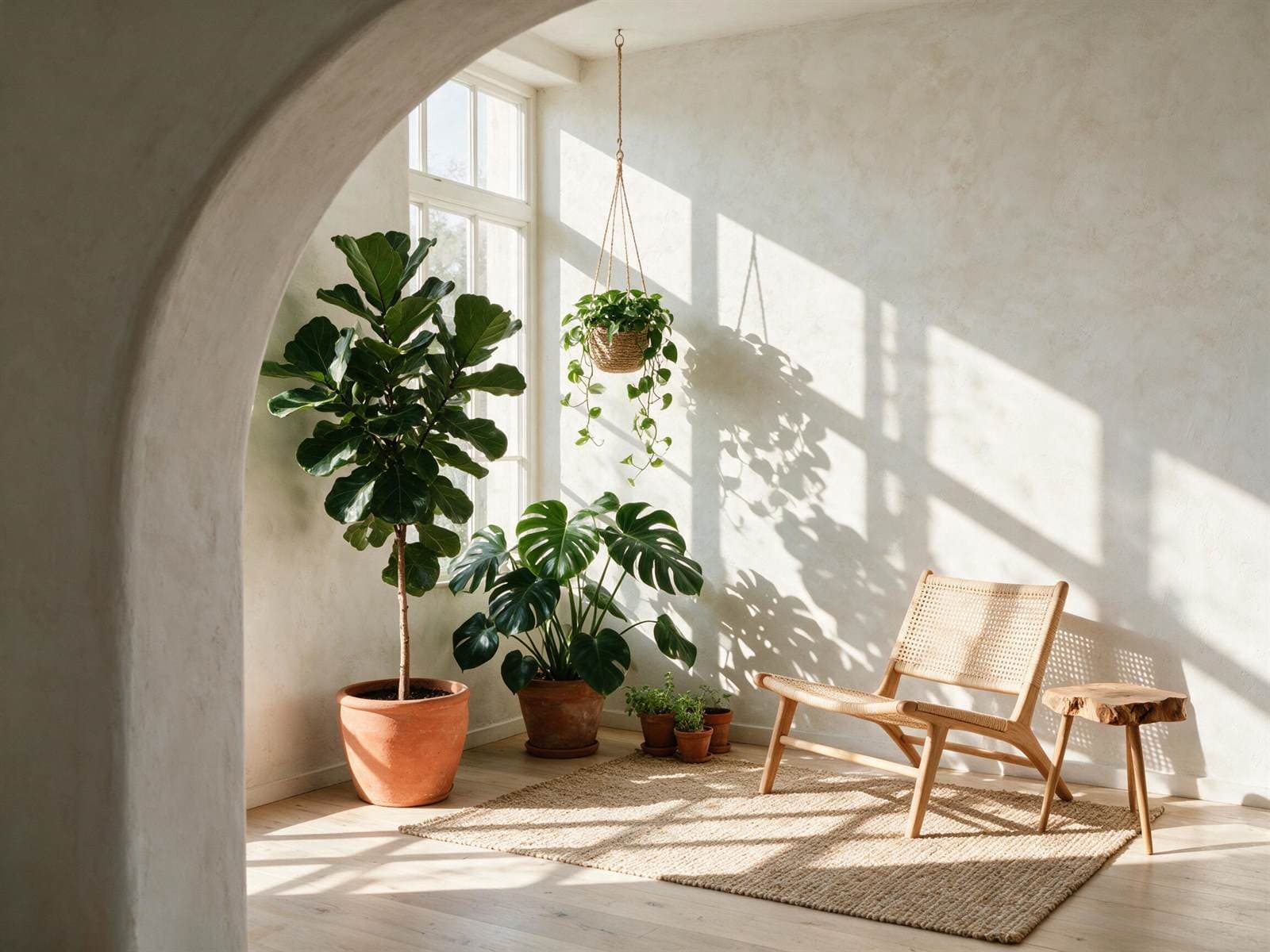
Biophilic design starts from a simple, well-studied idea: humans are drawn to nature, and being around it makes us feel better. Studies link natural elements indoors with lower cortisol — the stress hormone — and better focus and mood. Biophilic design is how you bottle that at home. It's one piece of a bigger picture, too — how rooms affect mood covers what else in a room your brain is quietly reacting to.
It's more than adding a plant
Greenery is the obvious part, but biophilic design works on several senses at once: natural light, natural materials, organic shapes, and views or hints of the outdoors. The more of these you layer, the more the room reads as 'alive'.
The research behind all of this — what nature, light and clutter measurably do to stress — is collected in one place: The RoomCalm Theory.
Read the research →The building blocks
- ·Plants at varied scale — a large statement plant plus a few smaller ones
- ·Maximised natural light, with sheer rather than heavy window coverings
- ·Natural materials: wood, rattan, stone, clay, jute
- ·An earthy palette — greens, warm woods, terracotta, sand
- ·Organic shapes and textures rather than hard, glossy surfaces
Easy plants that survive real life
If you're nervous about keeping things alive, start forgiving: snake plants, pothos, ZZ plants and cast-iron plants tolerate low light and irregular watering. A single healthy plant at a meaningful size does more for a room than a shelf of struggling seedlings.
Room by room
In a living room, a large plant anchors a corner and softens hard furniture. In a bedroom, greenery and natural textures deepen the sense of calm. Even a bathroom can go biophilic with a humidity-loving fern or eucalyptus and natural materials — just never inside the tub or basin.
Half of biophilic design is simply letting the light in. If that's the part your room is missing, this guide goes deep on it.
Read: Light & Airy Style Guide →Bring your room to life
"Add life" is one of the most common things people ask RoomCalm for — and biophilic is the answer. Upload a photo, tell us you want the room to feel fresh and alive, and see it transformed with nature done right.
See your own room brought to life — free, no sign-up, with your real room and furniture kept.
Bring my room to life →Quick answers
Does biophilic design actually reduce stress?
Being around natural elements indoors is linked with lower cortisol, the stress hormone, along with better focus and mood, and that well-studied idea is what biophilic design is built on. The honest caveat is that a single plant in a dark, cluttered room won't do much on its own. The effect comes from layering nature across several senses: light, materials, shapes and greenery together.
Is one big plant better than several small ones?
One healthy plant at a meaningful size does more for a room than a shelf of struggling seedlings. The ideal is varied scale: a large statement plant that anchors a corner, plus a few smaller ones. If you're choosing where to spend, buy the big one first and let it soften the hard furniture around it. Quantity of plants was never the point.
Can I do biophilic design in a room with very little natural light?
Yes, up to a point, if you lean on the parts that don't need sun. Snake plants, pothos, ZZ plants and cast-iron plants tolerate low light and irregular watering. Wood, rattan, stone, clay and jute bring nature in without needing a window at all, and an earthy palette of greens, terracotta and sand does the rest.
Can you put plants in a bathroom?
Yes, a bathroom can go biophilic with a humidity-loving fern or eucalyptus, which suit the damp air better than most houseplants. Pair them with natural materials like wood or stone for the full effect. The one rule is placement: never inside the tub or basin. A shelf or windowsill is where they belong.
What colors work for a biophilic room?
An earthy palette of greens, warm woods, terracotta and sand. The colors are meant to read as something that could exist outdoors, so hard, glossy surfaces work against you even when the plants are thriving. Pair the palette with organic shapes and natural textures, and let the light in through sheer rather than heavy curtains.