Journal · By Anas · Updated August 21, 2026 · 6 min read
Coastal Interior Style Guide — Breezy, Light & Grown-Up
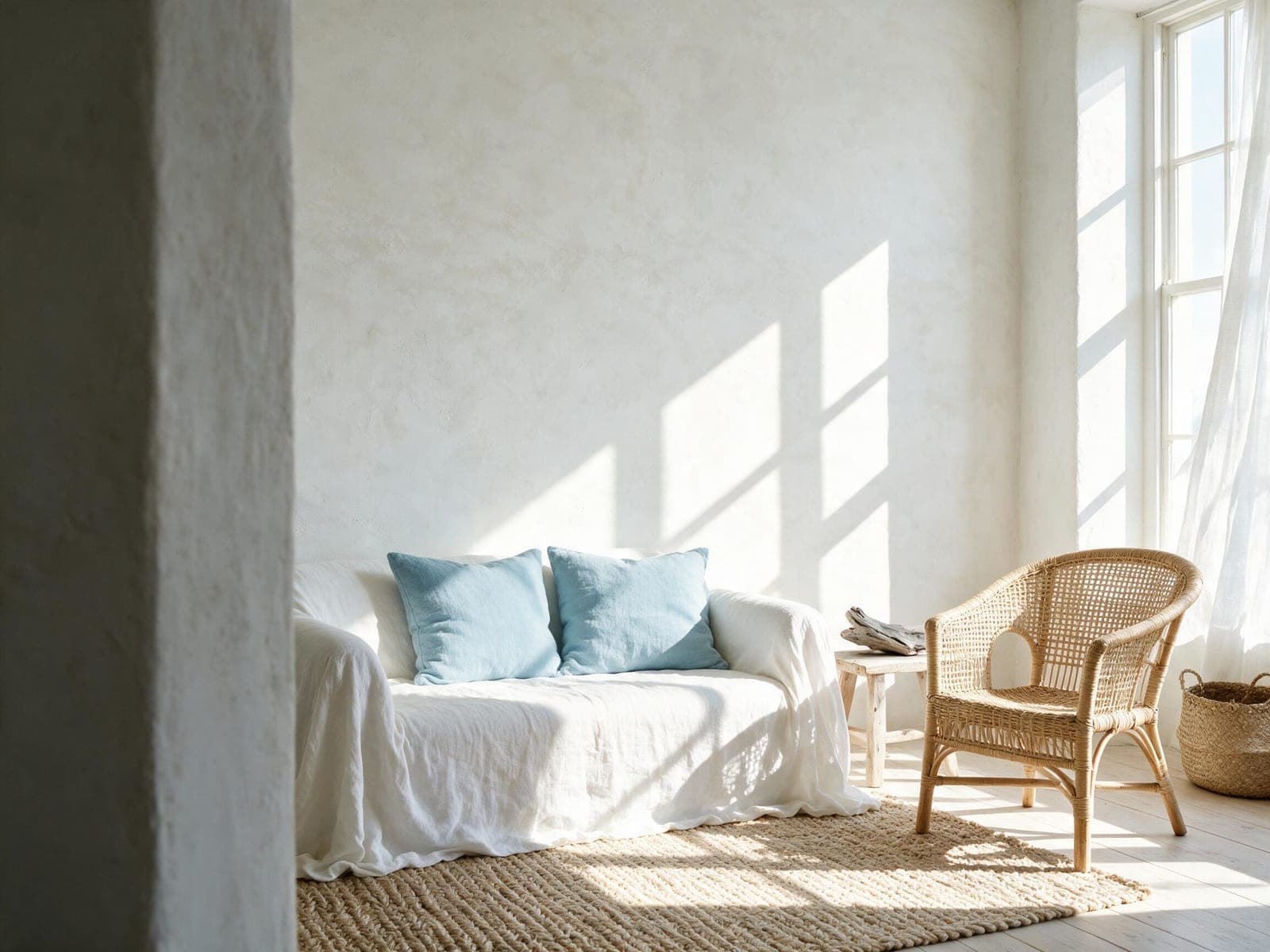
Walk into a genuinely beautiful coastal home and you won't find a single anchor. No rope-wrapped candles, no 'Life's Better at the Beach' sign, not one decorative seagull. What you'll find instead is harder to point at: the room feels like a deep breath. Light moves through it. Nothing is heavy. That's the real coastal style — and the good news is that it has nothing to do with owning a beach house. It's a set of tricks with light, color and texture, and they work in a city apartment in the middle of winter.
What coastal style actually is
Coastal design recreates what being near water does to a space: enormous soft light, air that moves, colors washed out by sun and salt, and materials that don't fight the humidity — cotton, linen, jute, weathered wood. The mood is unhurried. If japandi is calm through discipline, coastal is calm through ease. Nothing in a coastal room looks like it's trying.
The palette: sand first, blue second
The rookie mistake is leading with navy-and-white stripes. Real coastal rooms lead with SAND: warm whites, oat, driftwood grey, washed beige — and then let soft blues arrive in small doses, like the sea showing up between dunes. A blue cushion, a faded blue throw, sea-glass ceramics. Keep every color looking slightly sun-faded; anything saturated breaks the spell.
Light is the whole point
- ·Sheer curtains, always — the billow IS the style. Heavy drapes kill coastal instantly.
- ·Mirrors placed to bounce window light deeper into the room.
- ·White or pale walls that amplify whatever daylight you have.
- ·In the evening: warm lamps, never cool bulbs — sunset, not hospital.
Textures that do the talking
Coastal rooms layer natural, breathable textures: a jute or sisal rug, washed linen slipcovers, cotton throws, rattan or weathered-wood furniture, a driftwood bowl. The look is relaxed, slightly rumpled, sun-dried. If a material would survive a wet swimsuit tossed on it, it probably belongs.
The clichés to skip
- ·Anchor motifs, rope accents, ship wheels — decor that announces 'beach' is the opposite of feeling like one.
- ·Seashell collections on every surface (one bowl, if they're really yours, is plenty).
- ·Word signs pointing to the beach.
- ·High-gloss navy everything — coastal blue is faded, not nautical-uniform.
Get the look far from any coast
Swap heavy curtains for white sheers, slipcover or throw the sofa in washed linen, put a jute rug down, add one rattan piece and a few sea-toned ceramics, and change your bulbs to warm. That's it — six changes, all renter-safe, and the room starts breathing. Coastal is the cheapest 'expensive' look there is, because its materials are humble by definition.
Love light-filled rooms in general? The airy look is coastal's city cousin.
Read: Light & Airy Style Guide →Is coastal your style?
If your answer to 'how should home feel?' is breezy, easy and bright — and heavy furniture makes you feel claustrophobic — coastal is probably yours. Torn between this and something warmer? The quiz settles it in two minutes.
Answer seven quick questions and find the style that keeps matching your instincts.
Take the free Room Style Quiz →See your room, coastal edition
The fastest way to know if the breezy look suits your actual room: upload a photo to RoomCalm, pick Coastal, and see your own space washed in light — free, no login, plus the first thing to change.
Choosing a soft sea-glass or sand color? See it on your own walls first, free.
Preview paint colors on your room →See your own room in coastal style — free, no sign-up.
Try it on your room →For the walls: eight coastal prints in one washed palette — warm white, sea blue, sand, rattan — plus the real paint codes and the hanging guide.
The Coastal Kit — 8 printable wall art prints, $14 →Quick answers
What is the difference between coastal and nautical style?
Coastal style is about what light and air do to a room near water, while nautical style is the decor that announces the beach: anchors, rope accents, ship wheels and high-gloss navy. Coastal blue is faded, not uniform-navy, and it arrives in small doses after the sand tones. If a piece is telling you it's from the sea, it belongs to nautical.
Should a coastal room be blue and white?
No, real coastal rooms lead with sand tones and let blue arrive second, in small doses. Leading with navy-and-white stripes is the rookie mistake. Start with warm whites, oat, driftwood grey and washed beige, then add a faded blue throw or sea-glass ceramics the way the sea shows up between dunes. Keep every color slightly sun-faded.
What curtains work for coastal style?
Sheer white curtains are the coastal choice, always, because the billow is the style and heavy drapes kill the look instantly. Swapping heavy curtains for sheers is the first of the six renter-safe changes, and it's the one that changes the room most. Pair them with pale walls and a mirror placed to bounce daylight deeper into the space.
Does coastal style work in a city apartment in winter?
Yes, coastal style works miles from any coast, because it's a set of tricks with light, color and texture rather than a location. Six renter-safe changes get you there: white sheers, a washed-linen slipcover or throw, a jute rug, one rattan piece, a few sea-toned ceramics and warm bulbs. Its materials are humble by definition.
What is the difference between coastal and japandi?
Japandi is calm through discipline, and coastal is calm through ease. Both aim for an unhurried room, but coastal gets there with relaxed, slightly rumpled textures, cotton, linen, jute and weathered wood, and nothing that looks like it's trying. If a material would survive a wet swimsuit tossed on it, it's coastal.