Journal · By Anas · Updated August 21, 2026 · 8 min read
How to Redecorate a Room: Where to Start (Step by Step)
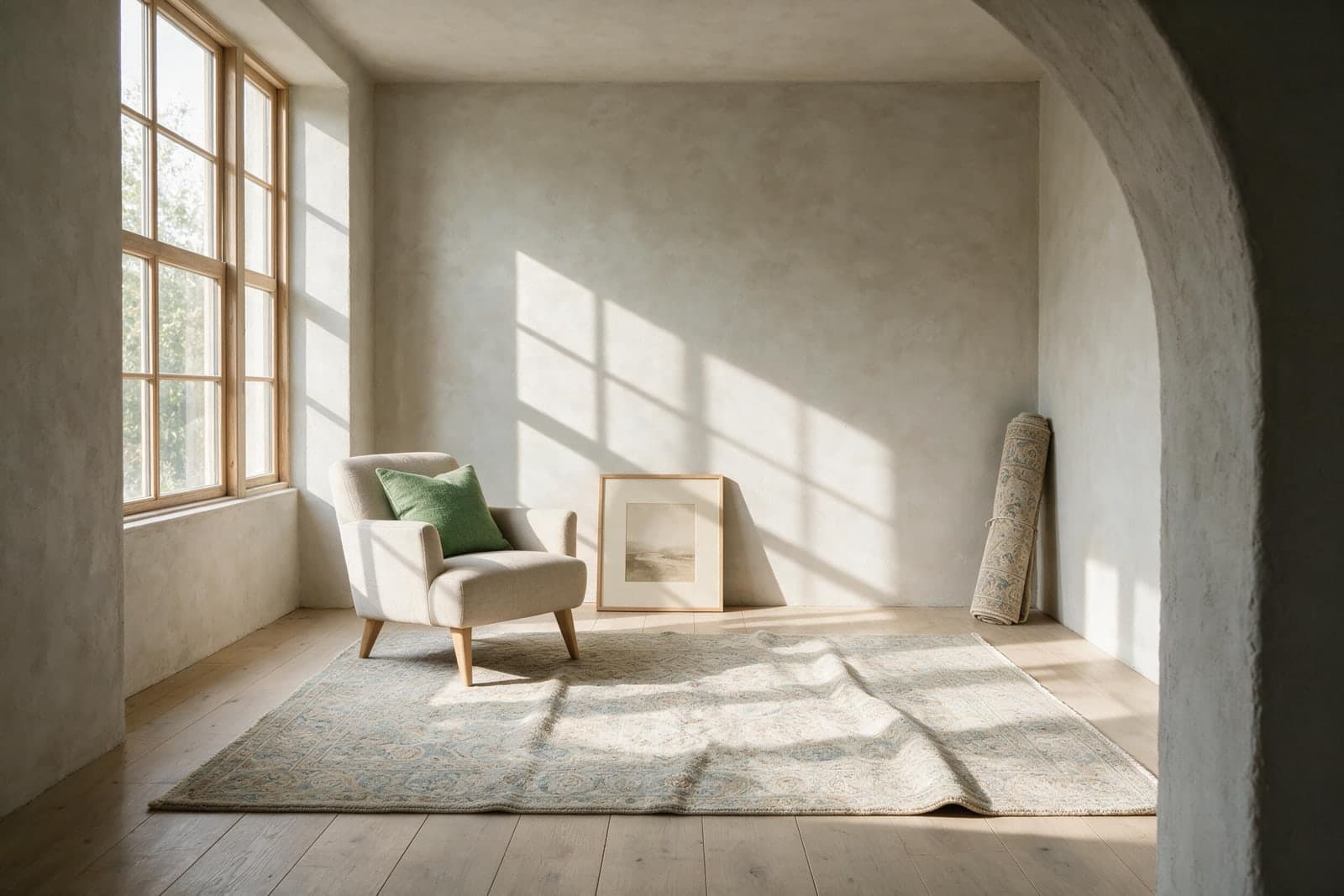
You know the feeling. You're standing in the middle of a room you've quietly fallen out of love with, you know you want it to be different, and… nothing. Where do you even start? So you do what almost everyone does — grab a cushion, a lamp, maybe a rug that looked amazing in the shop — and three purchases later the room feels exactly as off as before, just more expensive.
Here's why that happens: you started at the wrong end. Redecorating isn't a shopping problem, it's an order-of-operations problem. Get the order right and every choice afterwards gets easier and cheaper. Get it wrong and you'll keep buying things that don't talk to each other. So here's the order that actually works — top to bottom, no wasted money.
Step 1: Start with the feeling, not the furniture
The most important question isn't “what should I buy?” It's “how do I want this room to feel?” Calm and uncluttered? Warm and cozy? Bright and energising? Everything else — colors, furniture, lighting — is just a tool to create that feeling, and until you've named it you're shopping blind. Pick one word and write it down. That word is now the filter every later decision passes through.
Step 2: Empty it before you fill it
Before you add a single new thing, take things away. Declutter the room down to what you actually use and love — clear the surfaces, the floor, the forgotten corners. Two things happen. You see the room's real bones for the first time, and you often discover it didn't need more stuff at all; it needed less. You can't design around clutter, so this always comes first.
Step 3: Find your one anchor piece
Now the fun part. Pick one thing to build the whole room around — a rug you love, a piece of art, a standout chair, a patterned cushion. Here's the trick most people get backwards: it's far easier to match a paint color to a rug than a rug to a paint color. Start from one anchor you're sure about and design outward from it, and the guesswork mostly disappears.
Not sure of your style yet? A quick mood board reveals it fast — here's how to build one that actually guides the room.
Read: How to Build a Home Decor Mood Board →Step 4: Pull your palette straight from the anchor
Your anchor piece hands you your colors for free. Pull three or four shades out of it — one main, one or two supporting, one accent — and let those repeat around the room. Keep them in the same warm (or cool) family so the eye glides instead of snagging. A tight, repeated palette is the single biggest thing that makes a room look pulled-together rather than pieced-together.
Step 5: Take honest inventory — keep, move, lose
Walk the room with three piles in mind. What stays because you love it and it fits the feeling? What could stay if you moved it, recovered it, or repainted it? And what quietly has to go? Being honest here saves you the most money of any step — because half of redecorating is reusing what you already own in a smarter way, and the other half is knowing the exact gaps you need to fill. The move pile is the cheapest of the three, and it has its own rules, which we have put in how to rearrange a room without buying anything.
Step 6: Buy foundations first, accents last
When you do spend, spend in the right order. Foundations first: the grounding pieces that set the whole room — a properly sized rug, the lighting, the one key piece of furniture. Accents last: cushions, art, the little finishing touches. People do this backwards, blow the budget on trinkets, and then can't afford the rug that would have tied it all together. Big and grounding before small and pretty.
Want the foundations to look high-end on a small budget? These cheap tricks punch well above their price.
Read: Cheap Ways to Make a Room Look Expensive →Step 7: Layer texture and light — this is where the feeling lives
The last 10% is what people actually feel when they walk in. Layer in texture — a throw, natural materials, a plant — and get the lighting right with a few warm sources at different heights instead of one harsh overhead. This is the stage that turns “nicely decorated” into the feeling you chose back in Step 1. Don't rush it; it's the payoff.
The mistake that costs the most: buying before you can see it
The most expensive redecorating mistake isn't a bad sofa — it's buying anything at all before you can picture the finished room. That's where hundreds get wasted on pieces that don't fit the space or each other. So close that gap before you spend: snap a photo of your room, tell the tool the feeling you chose in Step 1, and see it restyled first. RoomCalm does exactly this in about a minute — free, no login — and hands you back your real room made over, plus the first thing to change.
See your actual room redesigned before you buy a thing — free, no sign-up.
Try free AI room design (no login) →Your whole redecorating order, on one line
Print this on the inside of your eyelids and redecorating stops being scary:
- ·1. Name the feeling you want.
- ·2. Declutter down to what you love.
- ·3. Choose one anchor piece.
- ·4. Pull your palette from it.
- ·5. Inventory: keep, move, lose.
- ·6. Buy foundations first, accents last.
- ·7. Layer texture and light to finish.
- ·(And see it before you spend.)
Redecorating stops feeling overwhelming the moment you stop asking “what should I buy?” and start asking “how do I want to feel in here?” Answer that first, and every other decision quietly lines up behind it.
Quick answers
Should I paint the walls first when redecorating a room?
No, choose your paint after you've picked an anchor piece, because it's far easier to match a paint color to a rug than a rug to a paint color. Start with the one thing you're sure about, a rug, a piece of art, a standout chair, and pull three or four shades from it. The walls then become one of those shades instead of a guess you have to shop around.
Do I need to buy all new furniture to redecorate?
No, half of redecorating is reusing what you already own in a smarter way. Walk the room with three piles in mind: what stays because you love it and it fits the feeling, what could stay if you moved it, recovered it or repainted it, and what quietly has to go. Being honest at that step saves more money than any other.
Why does my room still feel off after buying new things?
A room that still feels off after new purchases usually got started at the wrong end, with shopping before a plan. A cushion, a lamp and a rug bought separately don't talk to each other. Name the feeling you want in one word, declutter, pick one anchor piece and pull your colors from it, and every later purchase has something to answer to.
How do I choose colors for a room I'm redecorating?
Take three or four shades from your anchor piece, one main, one or two supporting and one accent, then repeat them around the room. Keep them in the same warm or cool family so the eye glides instead of snagging. A tight, repeated palette is the single biggest thing that makes a room look pulled-together rather than pieced-together.
Can I see what my room will look like before I buy anything?
Yes, you can upload a photo of your room to RoomCalm, name the feeling you chose and see your actual room restyled in about a minute, free and with no login. It keeps your real layout and furniture and tells you what's holding the room back and the first thing to change. Buying before you can picture the finished room is the redecorating mistake that costs the most.