Journal · By Anas · Updated August 21, 2026 · 6 min read
How to Make a Small Room Feel Bigger — 9 Designer Tricks
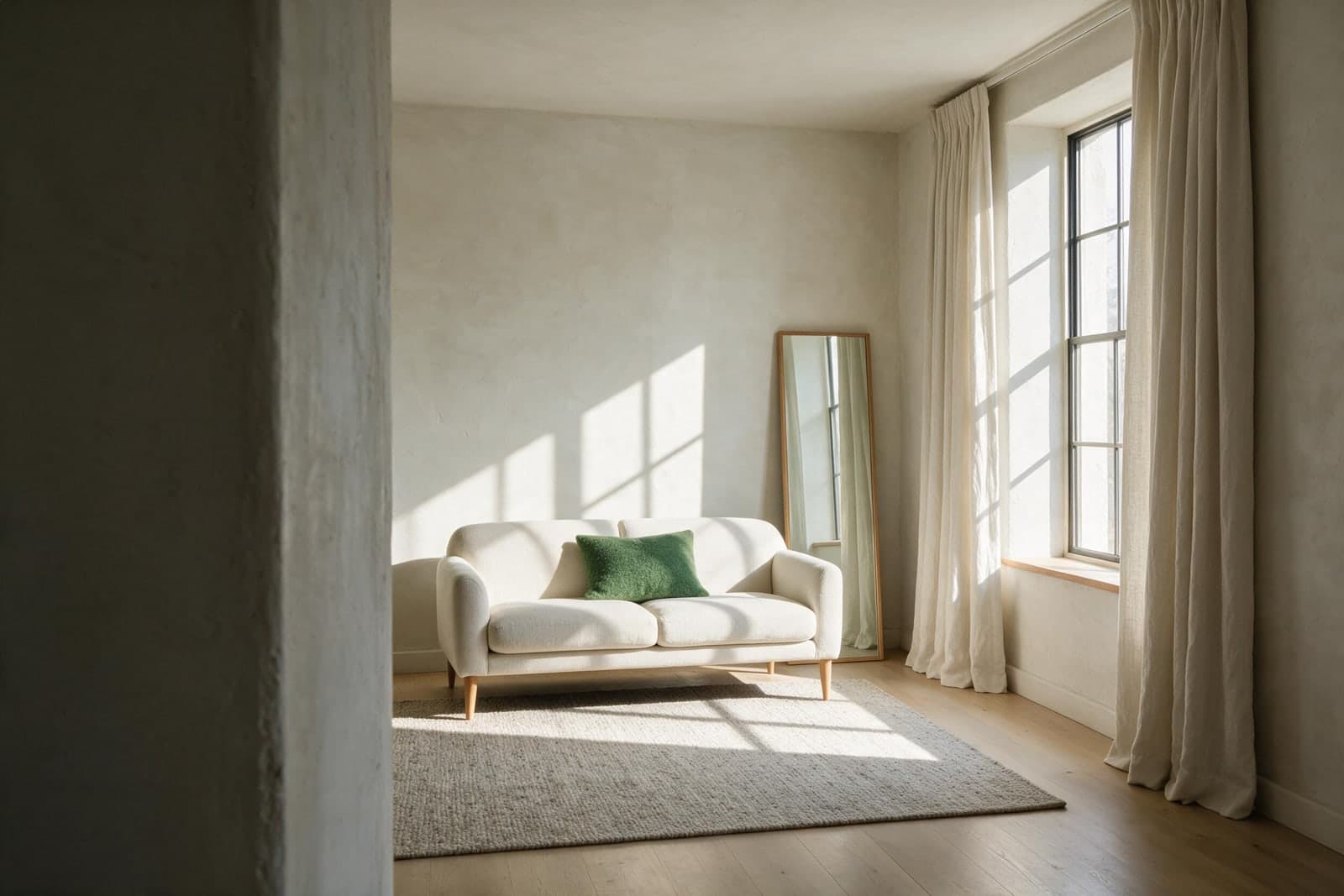
A small room isn't a design problem — it's a design puzzle, and the pieces are well known. The goal isn't to cram more in; it's to give the eye fewer things to stop on and more space to travel across. Do that, and even a box of a room starts to breathe. Here's how, in the order that matters.
1. Let the light in — it's the biggest lever you have
Natural light is the single strongest signal of space. Pull heavy curtains right back, clean the glass, and swap anything blocking the window for something low. Then layer in warm lamps at different heights so the room never falls into one flat, shadowy glow. A well-lit corner reads as depth; a dark one reads as a wall closing in.
2. Pick a pale, warm palette
Light colors reflect light and recede, which makes walls feel further away. You don't need stark white — a warm off-white, soft greige or gentle sage keeps things cozy while still opening the room up. Keep walls, trim and larger furniture in the same tonal family so the eye glides instead of stopping at every color change.
If pale, bright and open is exactly the feeling you're after, there's a whole style built around it — palette, curtains, furniture and all.
Read: Light & Airy Style Guide →3. Choose furniture on legs
A sofa or bed that sits flat on the floor reads as a heavy block. Lift it onto slim, visible legs and suddenly the floor flows underneath it — and visible floor is visible space. The same trick works for side tables, consoles and even storage.
4. Go big on a few things, not small on many
It feels backwards, but lots of tiny furniture makes a room feel cluttered and cramped, while a few properly scaled pieces feel calm and intentional. One large piece of art beats a scatter of little frames. One generous rug beats a small mat marooned in the middle of the floor.
5. Scale your rug up
A rug that's too small chops the floor into pieces and shrinks the room. Size it so the front legs of your furniture sit on it — the rug then reads as the footprint of the whole zone, and the space feels larger and more grounded.
6. Add a mirror where it counts
A large mirror opposite or beside a window bounces daylight deep into the room and doubles the sense of space. It's the closest thing interior design has to a cheat code for small rooms.
7. Clear the floor and the surfaces
Clutter doesn't just look untidy — visual noise makes a space feel smaller and, research shows, quietly raises stress. Get belongings up off the floor and into baskets, shelves or a wardrobe. Style surfaces to about two-thirds full, with breathing room around each object.
8. Draw the eye up
Hang curtains close to the ceiling and wider than the window, falling all the way to the floor. It lifts the perceived ceiling height and makes the window — and the whole wall — feel grander.
9. Leave a little emptiness on purpose
Negative space is a design feature, not a failure. A clear corner, a sliver of wall, a bare stretch of floor — these give the room somewhere to rest, and a room that can rest feels bigger than one packed to the edges.
See it on your own small room
Reading the rules is one thing; seeing them on your actual space is another. Upload a photo of your room to RoomCalm, tell us you want it to feel more spacious, and we'll restyle it using exactly these principles — then tell you the first change to make.
See all nine tricks applied to your actual room — free, no sign-up, and it keeps your real room instead of inventing a new one.
Make my room feel bigger →Quick answers
Which change should I make first in a small room?
Start with the light, because natural light is the strongest signal of space you have. Pull the curtains right back, clean the glass, and move anything tall away from the window. Then add warm lamps at different heights so no corner falls into flat shadow. A lit corner reads as depth; a dark one reads as a wall closing in.
Does painting a small room white make it look bigger?
Pale walls help, but stark white isn't required and can feel cold. A warm off-white, soft greige or gentle sage reflects light and recedes just as well while keeping the room cozy. What matters more than the exact shade is keeping walls, trim and the larger furniture in one tonal family, so the eye glides across the room instead of stopping at every color change.
Where should a mirror go to make a small room feel bigger?
Opposite or beside a window, and make it large. That position bounces daylight deep into the room and doubles the sense of space, which is about as close to a cheat code as small-room design gets. A small mirror on a dark wall does very little. One big one catching the window does most of the work by itself.
How much stuff should I leave on shelves and surfaces in a small room?
Style surfaces to about two-thirds full, with breathing room around each object. Visual noise makes a space read smaller and quietly raises stress, so get belongings up off the floor and into baskets, shelves or a wardrobe first. Then leave one corner, one stretch of wall or one patch of floor deliberately empty.
Can I make a small room feel bigger without buying anything?
Yes, and most of the biggest wins are free. Pull the curtains back and clean the windows, clear the floor and surfaces, move the rug so the front legs of your furniture sit on it, and hang your existing curtains as close to the ceiling as you can. If you then want to see all nine tricks on a photo of your own room, RoomCalm does that free with no sign-up and keeps your real room and belongings.