Journal · By Anas · Updated August 22, 2026 · 7 min read
Virtual Interior Decorator — Costs, What You Get & a $9 Option
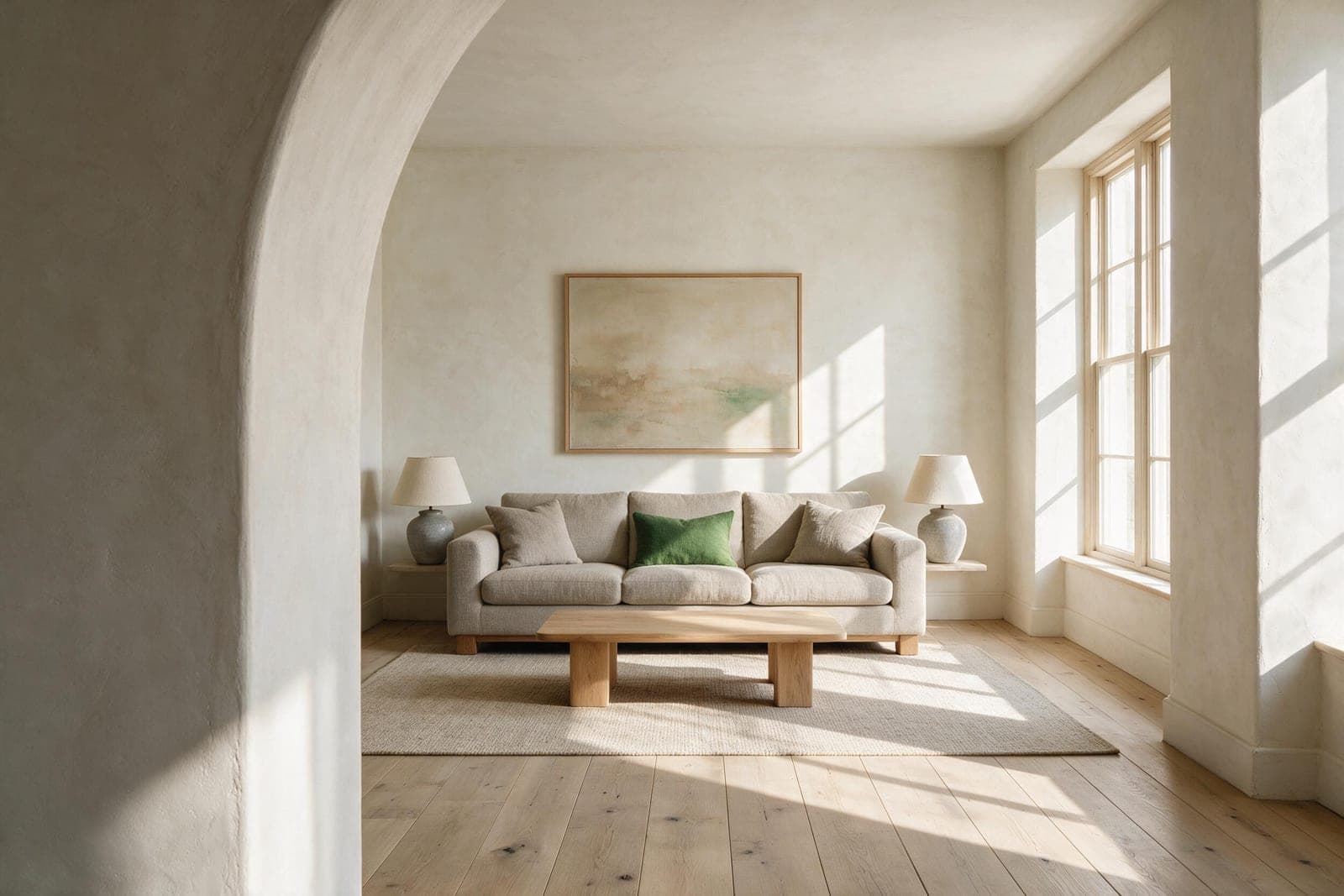
A virtual interior decorator is an interior designer you work with entirely online: you send photos and measurements, they send back a design, a room layout and a shopping list. It costs roughly $129 to $549 or more per room, depending on the service and how much hand-holding you want. Here's exactly what that money buys, when it's worth paying, and how an AI tool now does the core of it — the paint colours, the layout, the plan — for $9.
What is a virtual interior decorator?
It's remote e-design. Instead of a decorator visiting your home, you fill in a style questionnaire, upload photos of your room and a rough set of measurements, and a designer sends back a concept: a mood board, a to-scale furniture layout, and a clickable list of pieces to buy. You do the ordering and the actual work; they do the deciding. It's cheaper and faster than a designer who shows up in person, and for one room that isn't changing structurally, it's honestly where most people should start.
How much does a virtual interior decorator cost?
The price depends almost entirely on which service you pick, and the range is wide. These are 2026 published prices — worth confirming on each site, since they run promotions:
- ·Havenly — the popular budget option: around $129 per room for its Mini package, about $199 for Full (concept boards, product suggestions, a layout and more revisions), and roughly $699 if you want a designer in person.
- ·Decorilla — the premium end: roughly $549 to $2,200+ per room across three tiers, aimed at bigger, renovation-level jobs that need custom drawings.
- ·Independent e-designers (Etsy, freelance): often $79 to $500 per room for a concept board, a layout and a shopping list.
- ·In every case the furniture is separate. The fee buys the plan, not the pieces — budget for both.
What do you actually get for the money?
A typical virtual decorating package delivers a concept board (the look, in images), a furniture layout drawn to your room's dimensions, a shopping list with links and prices, and usually one or two rounds of revisions. The good ones also tell you what to keep. The thin ones hand you a pretty board and leave you to figure out whether any of it fits. Ask how many revisions are included and whether they work with what you already own before you pay. Revisions are where these packages quietly get expensive, exactly as they do in interior design renderings, where studios include one to three rounds and then charge $75 to $400 for each one after that.
What a human decorator does that AI can't — and the other way round
Here's the honest split, because it's the whole decision. A human decorator brings a trained eye on your specific room, taste built over years, access to trade-only pieces and discounts, and someone accountable when the sofa arrives in the wrong grey. Those are real, and on a whole-home or renovation project they're worth every dollar. We ran the same split against the AI tools with both price lists in hand in AI interior design vs hiring a designer, including the weekly-billing trap that makes some apps cost more than a decorator.
But a surprising amount of the deliverable is not taste — it's a rulebook of numbers. The paint colours pros pick are chosen by LRV, the light-reflectance value printed on the chip. The layout follows published clearances (walkways, the space around a bed, kitchen aisles). Art hangs at 57 inches, rugs are sized to the sofa, colour follows the 60-30-10 ratio. Those rules are public, and they can be applied to a photo of your room automatically. That's the part AI does well now.
That's what RoomCalm is: the AI version of the rule-driven part. Upload a photo, see your real room redesigned free, then unlock the Room Plan — real paint matches (brand, code and LRV) for the colours in your design, a lighting plan in real lumens, and the designer rules for your space — for $9. A Havenly Mini is $129 for a concept and a shopping list; this is $9 for the actual plan, on your actual room, with the redesign free.
See your room redesigned free →The whole price list is four lines — free first redesign, $9 one-time for 25, $15/mo unlimited, $30/mo everything.
RoomCalm pricing — from $9 one-time →Not sure the rules are real? We publish the whole rulebook we apply — the NKBA clearances, the lighting math, the LRV, the 57-inch rule — with its sources.
See the method →Is a virtual interior decorator worth it?
It depends on the job. It's worth it for a whole-home refresh, a renovation, or any time you want a real person's eye and their sourcing and someone to blame when something goes wrong. It's often overkill for one room on a normal budget, where the biggest risk is buying a rug you'll regret — there, a $129–$549 fee is expensive insurance against a $300 mistake, and the plan is the part you actually wanted. Start with the free AI version, see your own room changed, and you'll know within a minute whether you still need to hire someone.
Compare the whole ladder — hourly, per room, consultation — against the cheap alternatives in one place.
What an interior designer really costs →The short version: a virtual interior decorator is a genuinely good deal compared to an in-person designer, and a genuinely expensive way to get a single room's paint-and-layout plan. Match the tool to the job — a human for the complex, a $9 plan for the room you just want to stop disliking.
Quick answers
What is a virtual interior decorator?
A virtual interior decorator is an interior designer you work with entirely online — you send photos and measurements, and they send back a concept board, a to-scale furniture layout and a shopping list. You do the ordering yourself, which is why it costs far less than an in-person designer.
How much does a virtual interior decorator cost?
About $129 to $549 or more per room in 2026. Havenly starts around $129 per room, independent e-designers run $79–$500, and premium services like Decorilla run roughly $549–$2,200+ per room. The furniture is always billed separately.
Is a virtual interior decorator worth it?
It's worth it for whole rooms, renovations, or when you want a human's eye and sourcing. For one room on a modest budget it's often overkill — the fee mostly buys a plan you can now get from an AI tool for a fraction of the price.
What is the cheapest way to get a decorator's plan?
An AI tool is the cheapest route to the plan itself: RoomCalm redesigns your real room from one photo for free and unlocks the full Room Plan — matched paint codes with LRV, a lighting plan and the designer rules for your room — for $9, versus $129+ for a human virtual decorator.
Do virtual decorators include the furniture in the price?
No. The fee covers the design work — the concept, layout and shopping list — and the furniture is a separate cost on top, usually far more than the fee itself.