Journal · By Anas · Updated August 21, 2026 · 6 min read
Mid-Century Modern Guide — Without the Museum Look
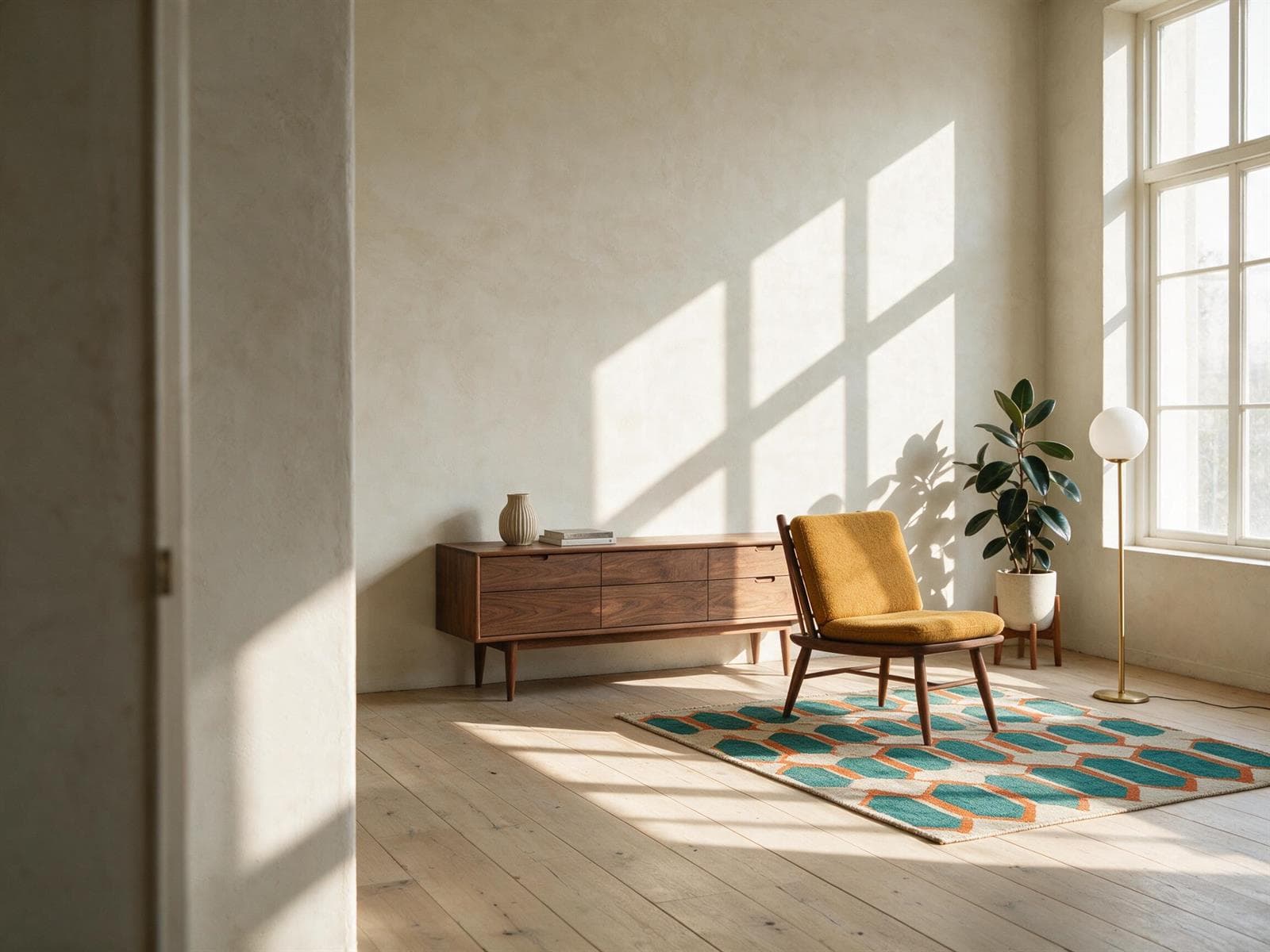
Here's a strange fact about interior design: almost everything from the 1950s is gone. The wallpapers, the pastel bathrooms, the plastic-covered sofas — extinct. But one look from that exact era is more popular today than it was then. Mid-century modern has outlived every trend that tried to replace it, and there's a real reason why — one worth understanding before you buy a single tapered leg.
Why it refuses to die
Mid-century modern was never a decoration style; it was a design philosophy. After the war, designers set out to make furniture that was honest, functional and human-scaled: real wood, visible joinery, shapes that follow the body, nothing ornamental for ornament's sake. Good proportions don't go out of fashion — that's the whole secret. A 1956 lounge chair looks current in 2026 because it was designed around the human being, and humans haven't changed shape.
The signatures that make it unmistakable
- ·Tapered legs — furniture stands lightly, floor flows underneath (bonus: makes small rooms feel bigger).
- ·Warm wood — walnut and teak above all, in satin, never glossy.
- ·Organic curves — kidney tables, egg chairs, boomerang shapes softening all the clean lines.
- ·Function-first honesty — storage that shows what it is, no fake drawers, no gilding.
The palette: earth plus one firework
Base of warm neutrals — cream walls, walnut furniture, camel leather — then ONE saturated retro accent doing the talking: mustard, burnt orange, teal or avocado. The classic mistake is using all four at once, which tips into theme-park. One firework per room. Let the wood be the star; it usually is anyway.
Real, replica, or thrifted?
You don't need a $6,000 original. The honest hierarchy: thrifted genuine mid-century pieces (still everywhere at estate sales and secondhand shops, often cheaper than new replicas and better made), then quality replicas for the iconic shapes, then modern pieces with mid-century DNA — tapered legs, walnut tone, clean lines. What to avoid: fast-furniture 'MCM-style' that copies the silhouette in materials that sag within a year. This style is about honest materials; fake it and the whole room knows.
The museum trap (and how to dodge it)
The most common mid-century failure isn't bad taste — it's too much devotion. A room where every single piece is period-correct feels like a set from a TV drama, not a home. The fix designers use: 70/30. Roughly 70% mid-century bones (sofa, credenza, coffee table, lighting), 30% now — a modern rug, contemporary art, current books, one plainly 2020s piece. The contrast is what makes the vintage sing instead of posing. (The same 70/30 trick rescues art deco rooms, a style even more tempted by full-period devotion.)
Prefer warm and current over retro? Mid-century's modern descendant is exactly that.
Read: Warm Modern Style Guide →Get the look in one weekend
- ·One walnut-tone anchor piece — credenza, coffee table, or sideboard (thrift it).
- ·A sculptural lamp — globe, mushroom or arc. Lighting carries this style hard.
- ·One retro accent color in cushions or a throw — mustard is the safest bet.
- ·A geometric or abstract rug to pull the zone together.
- ·One statement plant — the monstera was mid-century's houseplant and still is.
Is mid-century your style?
If you want a home that feels put-together, warm and a little bit cool without being cold — and you'd rather own five great pieces than twenty fine ones — mid-century is probably calling. Not sure against japandi or warm modern? Two minutes settles it.
Answer seven quick questions and find the style that keeps matching your instincts.
Take the free Room Style Quiz →See your room, mid-century edition
Upload a photo of your room to RoomCalm, pick Mid-Century Modern, and see your own space in walnut, mustard and clean retro lines — free, no login, plus the first thing to change.
See your own room in mid-century modern — free, no sign-up.
Try it on your room →Quick answers
What is the difference between mid-century modern and warm modern?
Warm modern is mid-century's modern descendant, so it keeps the warmth and clean lines but reads current rather than retro. Mid-century commits to the period signatures: tapered legs, walnut and teak, organic curves and one saturated retro accent. If you'd rather have warm and current than walnut and mustard, warm modern is the version you're looking for.
Do I need original mid-century furniture?
No, you don't need a $6,000 original, and the honest hierarchy starts with thrifted genuine pieces from estate sales and secondhand shops, which are often cheaper than new replicas and better made. Quality replicas come next for the iconic shapes, then modern pieces with mid-century DNA. Avoid fast-furniture MCM-style that copies the silhouette in materials that sag within a year.
What does the 70/30 rule mean in mid-century decorating?
The 70/30 rule means roughly 70% mid-century bones, such as the sofa, credenza, coffee table and lighting, and 30% plainly current pieces like a modern rug, contemporary art and today's books. It's the fix for rooms where every piece is period-correct and the home starts feeling like a TV set. The contrast is what makes the vintage sing instead of posing.
Which accent color is safest with mid-century furniture?
Mustard is the safest bet for a mid-century accent, used in cushions or a throw against a base of cream walls, walnut furniture and camel leather. Burnt orange, teal and avocado are the other classic options, but the rule is one firework per room. Using all four at once tips the room into theme-park, and the wood should stay the star anyway.
What houseplant goes with mid-century modern?
The monstera is the mid-century houseplant, and it still is. One statement plant sits on the weekend list alongside a walnut-tone anchor piece, a sculptural lamp, a single retro accent color and a geometric rug. Its big organic leaves do the same job the kidney tables and egg chairs do: softening all those clean lines.