Journal · By Anas · Updated August 21, 2026 · 7 min read
Art Deco Interior Design Guide — Everyday Glamour That Works
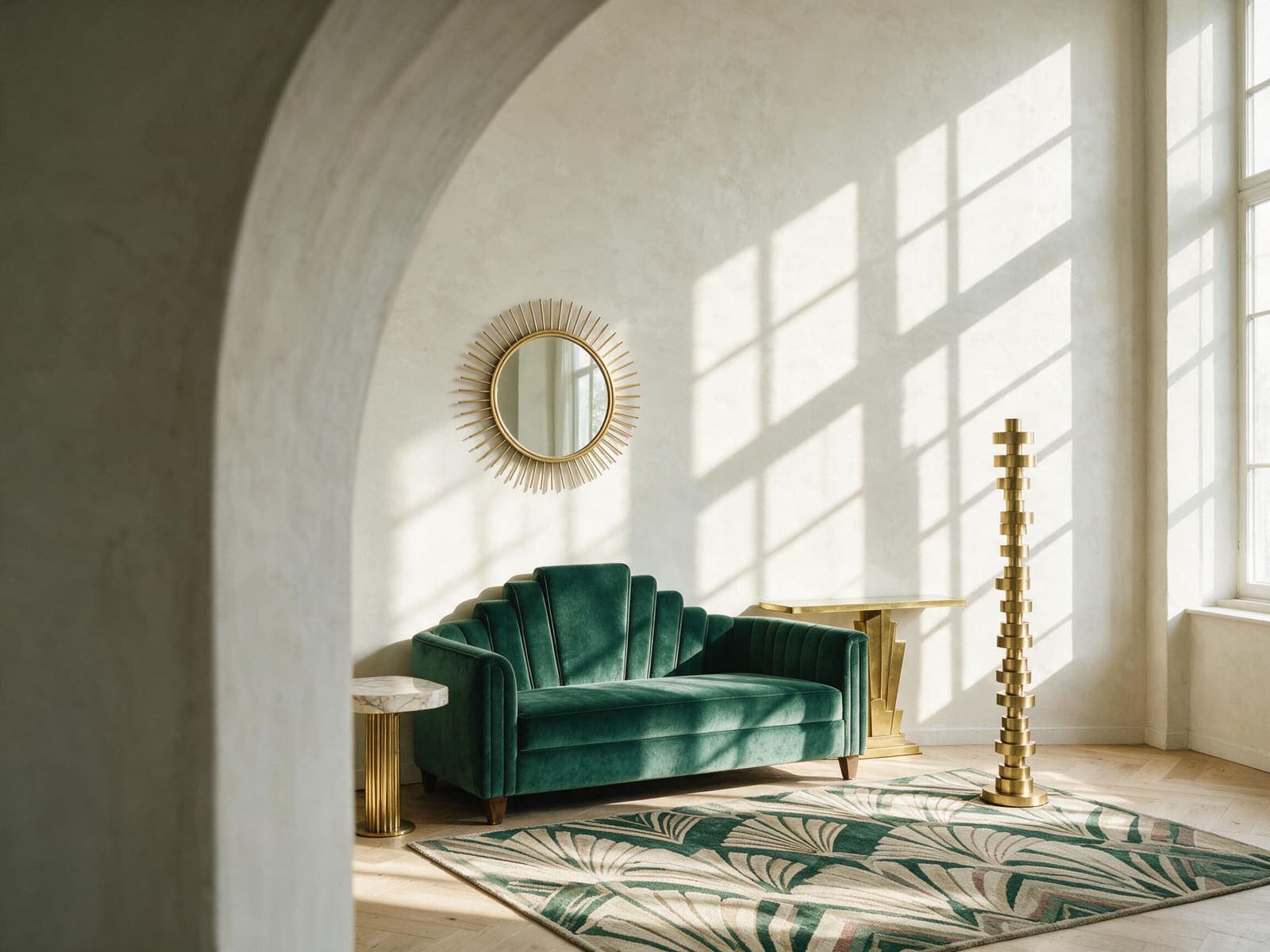
Art deco just turned a hundred years old, and it is still the only style that makes a room feel dressed up on an ordinary Tuesday. Green velvet, warm brass, confident geometry — you know it when you see it, usually in a hotel bar you didn't want to leave. Bringing it home comes with two honest problems: most people can't tell where the glamour actually comes from, so they buy gold-colored accessories and end up with a costume; and nobody tells you whether a style this dramatic can ever feel calm to live in. This guide answers both.
Where art deco comes from (and why it still works)
The name comes from a 1925 Paris exhibition of decorative arts, and the style itself was the roaring optimism of that decade made visible: machine-age geometry dressed in luxurious materials. Ocean liners, grand cinemas, the Chrysler Building — rooms designed to make ordinary people feel like the future had arrived and they were invited. That's the emotional engine, and it's why deco keeps coming back: it isn't nostalgic, it's confident. A century later, a fluted lamp and an arched mirror still read as optimism.
The formula: geometry plus glamour
Strip any deco room to its bones and you find a duet. One half is order: symmetry, repeated geometric pattern — fans, sunbursts, chevrons — and strong, deliberate shapes. The other half is richness: velvet, brass, lacquer, marble, mirror. The two halves need each other. Geometry without the rich materials turns cold and graphic, like a bank lobby. Rich materials without the geometry turn heavy and cluttered, like a dressing room that got away from someone. When a room 'isn't quite working' as deco, one of the two halves is almost always missing.
The palette: one jewel, lots of cream, brass as the thread
The classic mistake is treating deco as a licence for every jewel tone at once. The rooms that actually work run much quieter: a generous cream or warm ivory base, one jewel color doing the talking — emerald green is the crowd favorite, deep teal and burgundy close behind — black in small, sharp doses, and brass or gold repeated around the room like a thread stitching it together. That restraint is what separates a deco room from a casino.
The signatures
- ·Arches and curves — an arched mirror, a curved sofa back, a rounded bar cabinet.
- ·Fan, sunburst and chevron motifs — in a rug, a cushion, a headboard; used once or twice, not everywhere.
- ·Fluted and reeded surfaces — the ridged texture on a lamp base, a vase, a media unit.
- ·Velvet upholstery — the fastest single signal of the style, and it softens all that shine.
- ·Brass, gold and mirror — the light-catchers that make the room glitter gently by lamplight.
- ·Marble, or honest marble-look — a side table, a tray, a lamp base.
- ·Symmetric lighting — matching wall lights, or a pair of lamps flanking a mirror.
Can art deco ever feel calm? The honest answer
Mostly, deco is a stimulating style — that is the point of it. High contrast, shine, saturated color: it's a room with its posture straight, and it will never be as sleepy as Japandi or hygge. But it has one deeply calming trick built in: symmetry. A pair of lamps, a mirror centerd over a console, cushions balanced left and right — the eye reads symmetry as order, and order as ease. So if you want deco you can actually relax in: keep the symmetry strict, hold the palette to one jewel plus cream plus brass, let velvet — which soaks up light and sound — outweigh the shiny surfaces, and give the room one plain, quiet wall. And think twice about full deco in the bedroom. The living room wears the tuxedo better than the room where you're trying to fall asleep.
Get the look with what you already own
Start with symmetry, because it's free. Pair things up: two candlesticks, two lamps, matching cushions at each end of the sofa, the mirror moved so it sits centerd above the console. Then gather every gold, brass and glass thing you own onto one tray — the deco bar-cart moment, even if it holds perfume instead of gin. Style your shelves in blocks by color, straighten everything to right angles, and dig out the one velvet thing hiding in your linen cupboard. It's remarkable how far 'ordered and paired' goes toward glamour before you've bought a single new thing.
The affordable pieces that carry it
- ·An arched or sunburst mirror — the single fastest way to put deco on a wall.
- ·Velvet cushion covers in emerald or teal — the cheapest way to own the style's signature material.
- ·One brass table lamp, ideally with a fluted base or a glass globe.
- ·A geometric rug or throw — one fan or chevron moment, not five.
- ·A marble-look tray for the paired-up brass and glass.
- ·Secondhand gold: deco had a big revival in the 1980s, so thrift shops and auction sites are full of brass-and-glass side tables, mirrors and lamps that read perfectly deco for very little.
The Gatsby trap
Deco's failure mode is the theme party: feather centerpieces, champagne-glass word art, plastic gold everything, a room that looks like it's waiting for a photo booth. The test that saves you: real glamour is a material quality, not a message. Weight, shine, depth — a heavy brass candlestick says deco; a gold-printed slogan cushion says costume. When in doubt, buy fewer, heavier things, and let the geometry do the talking.
Love the brass-and-velvet richness but want it softer-spoken and easier to live with every day? Deco has a quiet modern descendant.
Read: Warm Modern Style Guide →Art deco vs mid-century modern (people mix these up)
They're both 'retro' and both love walnut and brass, but they want opposite things. Mid-century modern is humble on purpose: organic shapes, matte finishes, function first, nothing showing off. Deco is display on purpose: gloss, symmetry, ornament, drama. A mid-century room says 'sit down, get comfortable'; a deco room says 'stand up straight, you look wonderful'. If you're torn between them, that sentence usually settles it.
Is art deco your style?
If you want home to feel a little like an occasion — polished, intentional, quietly luxurious — and pale minimal rooms bore you, deco is probably calling. Torn between this, warm modern and mid-century? Seven quick questions settle it.
Answer seven quick questions and see which style keeps matching how you want home to feel.
Take the free Room Style Quiz →See your room, art deco edition
The fastest way to know whether your room can wear the tuxedo: upload a photo to RoomCalm, pick Art Deco, and see your own space in emerald, brass and confident curves — free, no sign-up, your real room and furniture kept, in under a minute — plus the first thing to change.
See your own room in art deco — free, no sign-up.
Try it on your room →Quick answers
What is art deco interior design?
Art deco is the 1920s style that pairs strong geometry — symmetry, fans, sunbursts, chevrons — with luxurious materials like velvet, brass, lacquer, marble and mirror. Named after a 1925 Paris exhibition of decorative arts, it's designed to make a room feel dressed up and optimistic.
What colors are art deco?
A cream or warm ivory base, one jewel tone doing the talking — emerald, deep teal or burgundy — black in small sharp doses, and brass or gold repeated around the room. The restraint matters: one jewel color reads as deco, five read as a casino.
Is art deco expensive to decorate with?
It doesn't have to be. Symmetry costs nothing, velvet cushion covers and a brass lamp are cheap, and the 1980s deco revival left secondhand shops full of brass-and-glass tables and mirrors that read perfectly deco. Spend on one arched mirror and let paired-up accessories do the rest.
Can art deco be calming?
It's naturally a stimulating style — high contrast and shine — but strict symmetry, a one-jewel palette and plenty of velvet keep it feeling ordered and composed rather than loud. For deep calm in a bedroom, most people are happier keeping full deco to the living room.
What is the difference between art deco and mid-century modern?
Deco (1920s-30s) is glamour: gloss, symmetry, ornament and drama. Mid-century modern (1950s-60s) is humility: organic shapes, matte wood, function first. They share warm wood and brass, but deco dresses up while mid-century relaxes.