Journal · By Anas · Updated August 21, 2026 · 6 min read
Moroccan Interior Style Guide — Bold Pattern, Calm Room
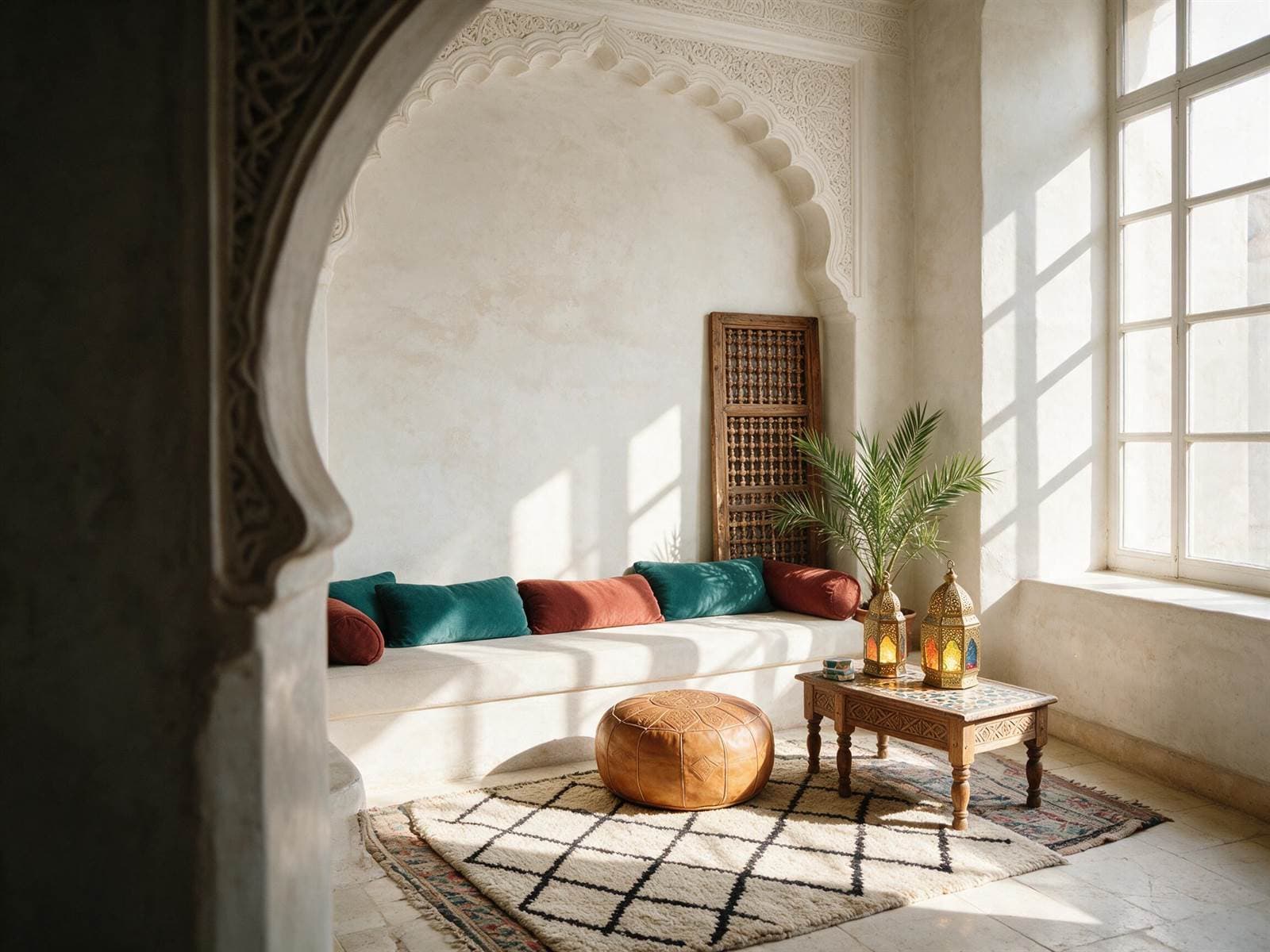
Here's a riddle from the design world: Moroccan style uses more pattern, more color and more texture than any other look on this list — and yet a real Moroccan interior is one of the calmest places you will ever stand in. That shouldn't be possible. Pattern is supposed to equal noise. The answer is a design secret roughly a thousand years old, and once you know it, you can use it in any room — no plane ticket, no pouf-and-lantern shopping spree required.
The riad secret: rooms that face inward
Traditional Moroccan townhouses — riads — are famously plain from the street: a high wall, a modest door. All the beauty points inward, toward a quiet courtyard with a fountain and light falling from above. The home isn't a display for visitors; it's a retreat from the world. That's the philosophical heart of the style, and it's why it belongs in a guide about calm at all: a Moroccan room isn't decorated to impress. It's built to restore. Every choice below serves that.
Why all that pattern doesn't become chaos
Now the practical secret. Moroccan rooms can layer a patterned rug over a patterned floor beside a patterned cushion because every color in the room shares the same warm, earthy undertone — clay, sand, spice. When the undertones agree, the eye reads ten patterns as one family instead of ten arguments. And the patterns themselves are geometric: stars, diamonds, trellis — order repeated with discipline. Pattern only turns into chaos when the colors underneath it disagree. That single rule is worth this whole article.
The palette: spice market, not rainbow
Base of sand and clay — warm cream plaster, terracotta, soft brown. Accents of spice — saffron yellow, ochre, rust, paprika red. Then one jewel, used sparingly: teal, emerald or deep Majorelle blue, the way a glazed tile flashes in a sand-colored wall. Keep the jewel tones to small doses and the earth tones in charge, and the room glows instead of shouting.
Materials that carry the style
- ·Zellige — hand-cut glazed tiles, each one slightly irregular, which is exactly why they look alive where machine tile looks flat.
- ·Tadelakt — polished lime plaster with a soft, stone-like sheen; the reason Moroccan walls feel warm even when they're plain.
- ·Carved wood — cedar doors, fretwork screens, a carved mirror frame.
- ·Brass and hammered metal — trays, lanterns, lamp bases, aged rather than polished.
- ·Leather and wool — the pouf, yes, but more importantly the rugs and throws.
The famous rug you didn't know was Moroccan
That cream shaggy rug with the black diamond pattern — the one in every Scandinavian and minimalist living room on Pinterest? It's a Beni Ourain, woven by Berber tribes in the Atlas Mountains, and designers have prized the real ones since the 1930s. Half the internet owns Moroccan design without knowing it. Which tells you something useful: Moroccan pieces mix beautifully into calm modern rooms. You don't have to go all-in for the style to work.
Light is decoration
Most styles light the room; Moroccan style decorates with the light itself. A pierced brass or glass lantern doesn't just glow — it throws its pattern across the walls and ceiling, so after dark the room wears lace made of light. Use several warm, low sources instead of one bright ceiling light, add a candle or two, and the evening version of the room becomes its best version.
Love the layered look but want it looser and more eclectic? Moroccan is boho's older, more disciplined cousin.
Read: The Boho Style Guide →The theme trap (one pouf is not Morocco)
The most common mistake is treating Moroccan style as souvenirs: one lantern, one pouf, a camel figurine, done. That reads as a theme, not a room. The style lives in surfaces and shapes — warm textured walls, arches (even just an arched mirror), low generous seating, layered rugs — with the accessories growing out of that base. Get the base right and two accessories are plenty. Get it wrong and twenty won't save it.
Get the look in one weekend
- ·One arched mirror — the fastest way to put Moroccan architecture on a flat wall.
- ·A Beni Ourain-style or flat-woven Berber rug to anchor the floor.
- ·A leather pouf or two — extra seating that never crowds the room.
- ·A brass tray on a stand or ottoman: instant table, instant glow.
- ·A pierced lantern or two, plus warm bulbs everywhere else.
- ·Terracotta pots with something green — the courtyard, miniaturised.
Is Moroccan your style?
If you want a home that feels warm, layered and quietly magical — richer than minimalism but never messy — Moroccan may be exactly what your instincts have been circling. Torn between this and boho or warm modern? Two minutes settles it.
Answer seven quick questions and find the style that keeps matching your instincts.
Take the free Room Style Quiz →See your room, Moroccan edition
The fastest way to know if the style suits your actual space: upload a photo to RoomCalm, pick Moroccan, and watch your own room rebuilt with warm plaster tones, layered rugs, brass light and arches — free, no login, plus the first thing to change.
Trying a warm terracotta or plaster tone? See it on your own walls first, free.
Preview paint colors on your room →See your own room in Moroccan style — free, no sign-up.
Try it on your room →Quick answers
What is the difference between Moroccan style and boho?
Moroccan style is boho's older, more disciplined cousin: both layer pattern and texture, but Moroccan rooms keep every color on the same warm, earthy undertone and use geometric patterns repeated with order. Boho mixes more freely and loosely. If you love the layered look but want it structured rather than eclectic, Moroccan is the one that stays calm while doing it.
Is a Beni Ourain rug Moroccan?
Yes, the cream shaggy rug with the black diamond pattern is a Beni Ourain, woven by Berber tribes in the Atlas Mountains and prized by designers since the 1930s. It sits in half the Scandinavian and minimalist living rooms on Pinterest, which proves a useful point: Moroccan pieces mix beautifully into calm modern rooms.
What is the difference between zellige and tadelakt?
Zellige is hand-cut glazed tile, and tadelakt is polished lime plaster with a soft, stone-like sheen. Zellige looks alive because each tile is slightly irregular where machine tile looks flat. Tadelakt is the reason Moroccan walls feel warm even when they're completely plain. One is the flash of color in a sand-colored wall; the other is the wall itself.
Can I mix Moroccan pieces into a minimalist room?
Yes, Moroccan pieces mix well into calm modern and minimalist rooms, and the Beni Ourain rug in every Scandinavian living room is the proof. The style doesn't demand a full conversion. A single arched mirror, a Berber rug or a brass tray works on its own, as long as the room's colors share that warm clay-and-sand undertone.
Does a Moroccan room need an arch?
Not a built one, because an arched mirror is the fastest way to put Moroccan architecture on a flat wall. The style lives in surfaces and shapes, meaning warm textured walls, arches, low generous seating and layered rugs, with accessories growing out of that base. Get the base right and two accessories are plenty.